This festive rasmalai cake is a delicious fusion cake combining the best of both worlds making it an ultimate dessert to treat your sweet tooth! And it is completely egg-free!

So this rasmalai cake was trending last year and I’ve been putting it off to even try it since then. Decking up a cake aka frosting is something that still intimidates me. And it is pretty evident in my amateurish finish! And I only make a frosted cake for an occasion, which brings us to today’s post.

As lame as it may sound, I baked this cake for my very own birthday which was last weekend. Of course, I didn’t have to. But the blogger in me saw a perfect opportunity to make a cake and blog about it 😀

If you aren’t aware of rasmalai, let me first familiarize you with this decadent Indian dessert. Rasmalai is Indian dessert consisting of flattened, spongy cottage cheese cakes dunked in thickened, sweetened milk flavored with saffron and cardamom. Like most Indian milk-based desserts, this one is super addictive.
- SO WHAT THEN IS THIS RASMALAI CAKE?
- STEP BY STEP INSTRUCTIONS TO MAKE RASMALAI CAKE (EGGLESS)
- HOW TO MAKE RASMALAI CAKE?
- Rasmalai cake | Eggless Rasmalai Cake
SO WHAT THEN IS THIS RASMALAI CAKE?
It is a cardamom flavored cake, the layers of which are soaked with the ‘ras’ (thickened, sweetened milk infused with cardamom and saffron) from the rasmalai, and frosted with ‘ras’ infused whipped cream, dressed up with nuts, dried rose petals, some ‘malai’ which refers to the creamy, spongy cottage cheese cakes.
This rasmalai cake is absolutely worthy of an ambrosial treat, and almost reminded me of yet another classic favorite – ‘ Mexican Tres leches cake ‘

I’ve used my basic vanilla cake recipe but swapped the eggs with yogurt to make this an eggless rasmalai cake. The cake is flavored with cardamom and almond extract instead. This plain cake itself smelled divine as it was baking, the kitchen was brimming with exotic flavors! Baking with cardamom is one that you should venture into if you love it’s complex, citrusy, floral characteristics. It is the most common spice used to flavor Indian desserts.
This mawa cake is flavored with cardamom, and so are these Karachi biscuits. You should definitely try them if you haven’t already! They are soooo good!

I made this eggless rasmalai cake with my very own homemade rasmalai. I shall be doing a post on that next, so stay tuned! {Update- You can find the recipe for rasmalai here }
In India, generally, a non-dairy cream is used to frost a cake that calls for whipping cream. That has a much smoother finish and looks much glossier as compared to dairy whipped cream. So if you have access to non -dairy cream use that for a good finish.
I got a little ambitious and divided the cake into 3 layers when I think 2 would have been much better. I ended up using a lot of cream, which can get a little overwhelming. So I’d suggest going in for just 2 layers for a cake of this size.
I had fun making this rasmalai cake, and I hope you will try it soon too 🙂

STEP BY STEP INSTRUCTIONS TO MAKE RASMALAI CAKE (EGGLESS)
For the cake base
1.Preheat the oven to 350 degrees F/ 180 degrees C. Position a rack in the middle of the oven. Grease a 7-inch cake tin with little butter and dust with flour to coat the pan, or you may use parchment paper.

2.In a medium mixing bowl, sieve flour, baking powder, baking soda, and cardamom powder. Add salt, whisk the dry ingredients until well combined. Set aside.

3.In the bowl of your stand mixer fitted with the paddle attachment, beat the butter and sugar on medium-high speed until light and creamy, scraping down in between, should take about 2-3 minutes. Or you can use an electric hand mixer/beater.

4.Add in the yogurt next, continue beating on medium-high speed.

5.In goes the almond extract next. Beat on medium speed for another 30 seconds.

6.Now reduce to the lowest possible speed, alternately add the dry ingredients and milk, starting with flour and ending with flour. ( DO NOT OVER MIX ).

7.Transfer the batter to the prepared cake tin. Give the tin a gentle tap, bake on the middle rack for 50-55 min or until the toothpick inserted in the center of the cake comes out clean.

8.Cool the cake on a rack in the tin for 10 minutes, then remove from the tin and cool on the rack completely. Slice the cake only once it has cooled down completely.

For the whipped cream frosting
1.In the bowl of your stand mixer fitted with the whisk attachment, add the heavy cream, icing sugar, almond extract, ‘ras’ from the rasmalai milk and 5-6 drops of yellow food color.

2.Whip the cream on low speed to incorporate the sugar, then increase the speed to medium-high and beat until it forms stiff peaks. Do not overbeat or else it will turn into butter. Another method to check if your cream is ready is by inverting bowl if the cream stays intact without showing signs of slipping from the bowl, it’s done. Refrigerate the cream in the meanwhile until you are ready to frost the cake.
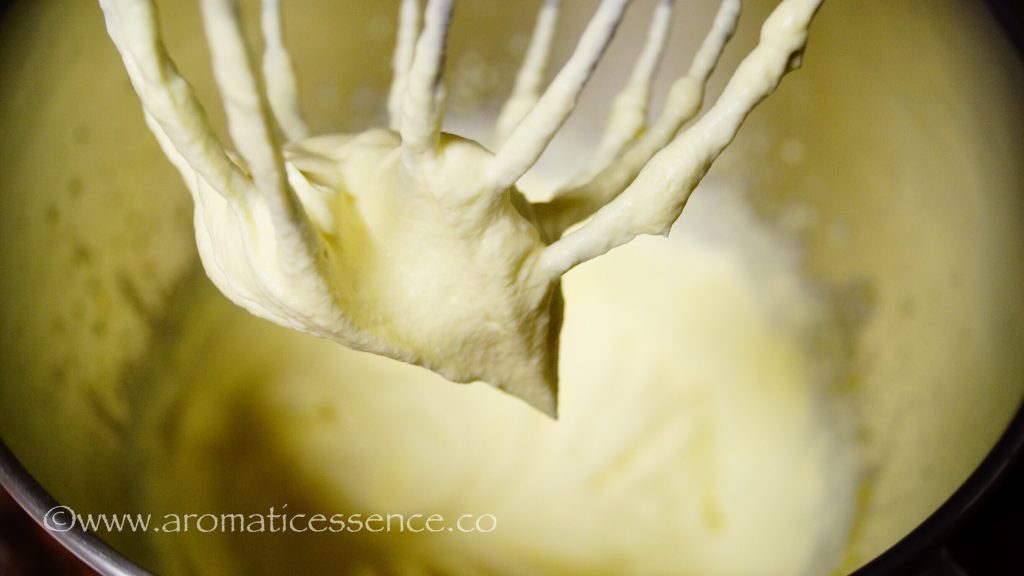
Assembling the cake
1.Once the cake has completely cooled down, divide it into 3 layers or (2 layers if you desire) with the help of a long serrated knife. Also, transfer some cream to a piping bag fitted with a Wilton 1A round tip (or you can simply snip off the edge of the piping bag before you begin piping), to pipe out the layers in between. I do this so that the cream layer looks even all over. You may simply transfer the cream with the help of a spatula if that is convenient for you.


2.Put a tbsp of whipped cream on the turntable. Transfer the first layer to the turntable. Brush it with ‘ras’ (thickened sweetened milk). Squeeze out the ‘ras’ from the rasmalai and crumble it int pieces directly over the layer brushed with the ‘ras’.Pipe out the whipped cream in circular motions starting from outer circumference towards the center. Flatten and smooth the cream with an offset spatula.

3.Repeat the same with the second layer.

4.Finally, place the last cake layer, and coat the cake with a rough crumb coating. Refrigerate it for 30 minutes.
5.Apply more whipped cream all over the cake and smooth out the edges.
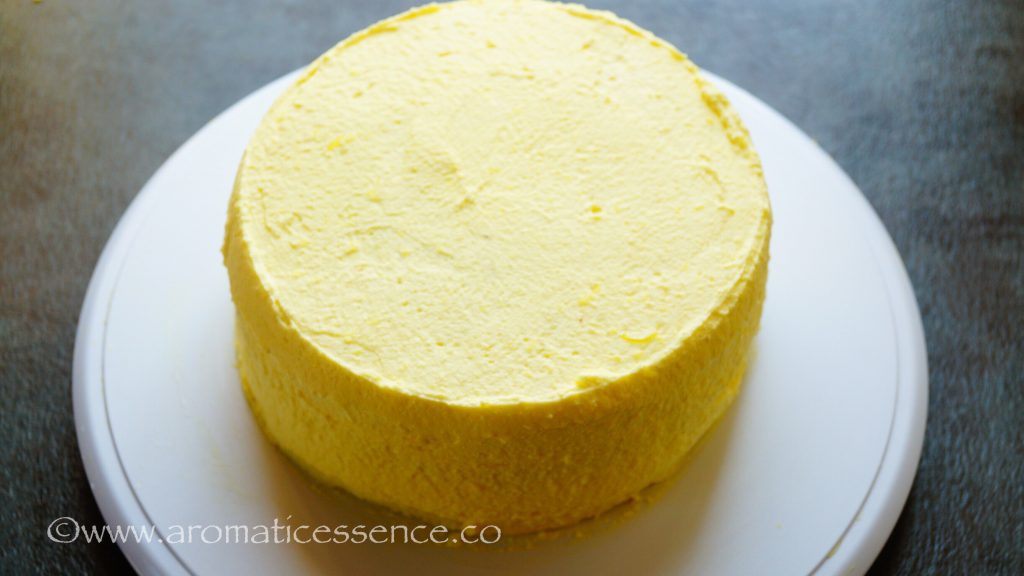
6.Transfer the remaining cream into a piping bag fitted with Wilton 1M nozzle or any other nozzle as per your design. Pipe out the cream to form rosettes or any other design.


7.Place some slivered pistachios, almond slices and dried rose petals all over the sides.

8.Cut 6 small circular disc from about 2 rasmalai’s, after squeezing out all the ‘ras’. Place it the center to resemble a flower. You can get creative and make any design you wish, or simply place rasgullas all over the cake, if you wish. Sprinkle some saffron strands, and dried rose petals on the top. Refrigerate the cake for 2-3 hours before serving. Enjoy yummy rasmalai cake 🙂
NOTE
1.You may reduce the heavy cream to 2.5 cups if you are dividing the cake into 2 layers.

HOW TO MAKE RASMALAI CAKE?

Rasmalai cake | Eggless Rasmalai Cake
Ingredients1x2x3x
Measuring cup used, 1 Cup = 250 ml, 1 tsp = 5 ml
For the cake base
- 1 & 1/2 cups / 7.5 oz / 214 grams unbleached all purpose flour (maida), spooned and leveled
- 1 cup / 7.4 oz / 210 grams sugar
- 1/2 cup / 4 oz / 113 grams unsalted butter
- 1/2 cup / 4 oz / 115 grams yogurt/dahi non sour
- 1 & 1/2 tsp baking powder
- 1/4 tsp baking soda
- 1/4 tsp salt, skip if using salted butter
- 1/4 tsp cardamom powder
- 1/4 tsp almond extract
- 1/2 cup milk
For the whipped cream frosting
- 3 cups of heavy whipping cream, 35 %
- 6 tbsp confectioner’s / icing sugar, sifted, (add more if you want it sweeter)
- 2 tbsp ‘ras’-sweetened thickened milk from the rasmalai
- 1/4 tsp almond extract
- yellow food color, as required (optional)
Other ingredients
- Approx 1/3 cup ‘ras’-sweetened thickened milk from the rasmalai to brush the cake layers
- 4 rasmalai’s
- Sliced pistachios as required
- Sliced almonds as required
- dried rose petals as required
Instructions
For the cake base
- Preheat the oven to 350 degrees F/ 180 degrees C. Position a rack in the middle of the oven. Grease a 7-inch cake tin with little butter and dust with flour to coat the pan, or you may use parchment paper.
- In a medium mixing bowl, sieve flour, baking powder, baking soda and cardamom powder. Add salt, whisk the dry ingredients until well combined. Set aside.
- In the bowl of your stand mixer fitted with the paddle attachment, beat the butter and sugar on medium-high speed until light and creamy, scraping down in between, should take about 2-3 minutes. Or you can use an electric hand mixer/beater.
- Add in the yogurt next, continue beating on medium-high speed.
- In goes the almond extract next. Beat on medium speed for another 30 seconds.
- Now reduce to the lowest possible speed, alternately add the dry ingredients and milk, starting with flour and ending with flour. ( DO NOT OVER MIX ).
- Transfer the batter to the prepared cake tin. Give the tin a gentle tap, bake on the middle rack for 50-55 min or until the toothpick inserted in the center of the cake comes out clean.
- Cool the cake on a rack in the tin for 10 minutes, then remove from the tin and cool on the rack completely. Slice the cake only once it has cooled down completely.
For the whipped cream frosting
- In the bowl of your stand mixer fitted with the whisk attachment, add the heavy cream, icing sugar, almond extract, ‘ras’ from the rasmalai milk and 5-6 drops of yellow food color.
- Whip the cream on low speed to incorporate the sugar, then increase the speed to medium-high and beat until it forms stiff peaks. Do not overbeat or else it will turn into butter. Another method to check if your cream is ready is by inverting bowl if the cream stays intact without showing signs of slipping from the bowl, it’s done. Refrigerate the cream in the meanwhile until you are ready to frost the cake.
Assembling the cake
- Once the cake has completely cooled down, divide it into 3 layers or (2 layers if you desire) with the help of a long serrated knife. Also, transfer some cream to a piping bag fitted with a Wilton 1A round tip (or you can simply snip off the edge of the piping bag before you begin piping), to pipe out the layers in between. I do this so that the cream layer looks even all over. You may simply transfer the cream with the help of a spatula if that is convenient for you.
- Put a tbsp of whipped cream on the turntable. Transfer the first layer to the turntable. Brush it with ‘ras’ (thickened sweetened milk). Squeeze out the ‘ras’ from the rasmalai and crumble it int pieces directly over the layer brushed with the ‘ras’.Pipe out the whipped cream in circular motions starting from outer circumference towards the center. Flatten and smooth the cream with an offset spatula.
- Repeat the same with the second layer.
- Finally, place the last cake layer, and coat the cake with a rough crumb coating. Refrigerate it for 30 minutes.
- Apply more whipped cream all over the cake and smooth out the edges.
- Transfer the remaining cream into a piping bag fitted with Wilton 1M nozzle or any other nozzle as per your design. Pipe out the cream to form rosettes or any other design.
- Place some slivered pistachios, almond slices and dried rose petals all over the sides.
- Cut 6 small circular disc from about 2 rasmalai’s, after squeezing out all the ‘ras’. Place it the center to resemble a flower. You can get creative and make any design you wish, or simply place rasgullas all over the cake, if you wish. Sprinkle some saffron strands, and dried rose petals on the top. Refrigerate the cake for 2-3 hours before serving. Enjoy yummy rasmalai cake.
Notes

I would love to hear from you! Please feel free to share your feedback with photos and suggestions to me at aromaticessence77@gmail.com
You can also follow me on :
Facebook @ Aromaticessence
Pinterest @ Aromatic Essence
Instagram @ aromatic_essence77
Twitter @ freda_dias
Regards,
Freda

Rasmalai cake | Eggless Rasmalai Cake
Ingredients
Measuring cup used, 1 Cup = 250 ml, 1 tsp = 5 ml
For the cake base
- 1 & 1/2 cups / 7.5 oz / 214 grams unbleached all purpose flour (maida), spooned and leveled
- 1 cup / 7.4 oz / 210 grams sugar
- 1/2 cup / 4 oz / 113 grams unsalted butter
- 1/2 cup / 4 oz / 115 grams yogurt/dahi non sour
- 1 & 1/2 tsp baking powder
- 1/4 tsp baking soda
- 1/4 tsp salt, skip if using salted butter
- 1/4 tsp cardamom powder
- 1/4 tsp almond extract
- 1/2 cup milk
For the whipped cream frosting
- 3 cups of heavy whipping cream, 35 %
- 6 tbsp confectioner’s / icing sugar, sifted, (add more if you want it sweeter)
- 2 tbsp ‘ras’-sweetened thickened milk from the rasmalai
- 1/4 tsp almond extract
- yellow food color, as required (optional)
Other ingredients
- Approx 1/3 cup ‘ras’-sweetened thickened milk from the rasmalai to brush the cake layers
- 4 rasmalai’s
- Sliced pistachios as required
- Sliced almonds as required
- dried rose petals as required
Instructions
For the cake base
- Preheat the oven to 350 degrees F/ 180 degrees C. Position a rack in the middle of the oven. Grease a 7-inch cake tin with little butter and dust with flour to coat the pan, or you may use parchment paper.
- In a medium mixing bowl, sieve flour, baking powder, baking soda and cardamom powder. Add salt, whisk the dry ingredients until well combined. Set aside.
- In the bowl of your stand mixer fitted with the paddle attachment, beat the butter and sugar on medium-high speed until light and creamy, scraping down in between, should take about 2-3 minutes. Or you can use an electric hand mixer/beater.
- Add in the yogurt next, continue beating on medium-high speed.
- In goes the almond extract next. Beat on medium speed for another 30 seconds.
- Now reduce to the lowest possible speed, alternately add the dry ingredients and milk, starting with flour and ending with flour. ( DO NOT OVER MIX ).
- Transfer the batter to the prepared cake tin. Give the tin a gentle tap, bake on the middle rack for 50-55 min or until the toothpick inserted in the center of the cake comes out clean.
- Cool the cake on a rack in the tin for 10 minutes, then remove from the tin and cool on the rack completely. Slice the cake only once it has cooled down completely.
For the whipped cream frosting
- In the bowl of your stand mixer fitted with the whisk attachment, add the heavy cream, icing sugar, almond extract, ‘ras’ from the rasmalai milk and 5-6 drops of yellow food color.
- Whip the cream on low speed to incorporate the sugar, then increase the speed to medium-high and beat until it forms stiff peaks. Do not overbeat or else it will turn into butter. Another method to check if your cream is ready is by inverting bowl if the cream stays intact without showing signs of slipping from the bowl, it’s done. Refrigerate the cream in the meanwhile until you are ready to frost the cake.
Assembling the cake
- Once the cake has completely cooled down, divide it into 3 layers or (2 layers if you desire) with the help of a long serrated knife. Also, transfer some cream to a piping bag fitted with a Wilton 1A round tip (or you can simply snip off the edge of the piping bag before you begin piping), to pipe out the layers in between. I do this so that the cream layer looks even all over. You may simply transfer the cream with the help of a spatula if that is convenient for you.
- Put a tbsp of whipped cream on the turntable. Transfer the first layer to the turntable. Brush it with ‘ras’ (thickened sweetened milk). Squeeze out the ‘ras’ from the rasmalai and crumble it int pieces directly over the layer brushed with the ‘ras’.Pipe out the whipped cream in circular motions starting from outer circumference towards the center. Flatten and smooth the cream with an offset spatula.
- Repeat the same with the second layer.
- Finally, place the last cake layer, and coat the cake with a rough crumb coating. Refrigerate it for 30 minutes.
- Apply more whipped cream all over the cake and smooth out the edges.
- Transfer the remaining cream into a piping bag fitted with Wilton 1M nozzle or any other nozzle as per your design. Pipe out the cream to form rosettes or any other design.
- Place some slivered pistachios, almond slices and dried rose petals all over the sides.
- Cut 6 small circular disc from about 2 rasmalai’s, after squeezing out all the ‘ras’. Place it the center to resemble a flower. You can get creative and make any design you wish, or simply place rasgullas all over the cake, if you wish. Sprinkle some saffron strands, and dried rose petals on the top. Refrigerate the cake for 2-3 hours before serving. Enjoy yummy rasmalai cake.
Notes
Rasmalai | Rossomalai | Rosh molai, the popular dessert from Bengal, India, is a heavenly treat that is sure to tantalize your taste buds! Here’s an easy rasmalai recipe with all the tips and tricks to make soft rasmalai at home!

Bengali sweets are one of the most loved Indian sweets. Some of my favorites are rasgulla, sandesh, mishti doi, bhapa doi, patishapta (similar to Goan alle belle, coconut pancakes) and much more. I have a big sweet-tooth and milk-based desserts are my weakness!
So let’s get into all the details to make soft rasmalai at home.
- What is rasmalai?
- Ingredients needed to make this classic Bengali sweet
- How to prepare rasmalai?
- Easy, alternative ways to make rasmalai
- Tips to make the best rasmalai at home
- Enjoyed this rasmalai recipe? Then you may also like these Indian sweet recipes
- How to make soft rasmalai at home – Step by step instructions
- Rasmalai Recipe | How To Make Rasmalai
What is rasmalai?
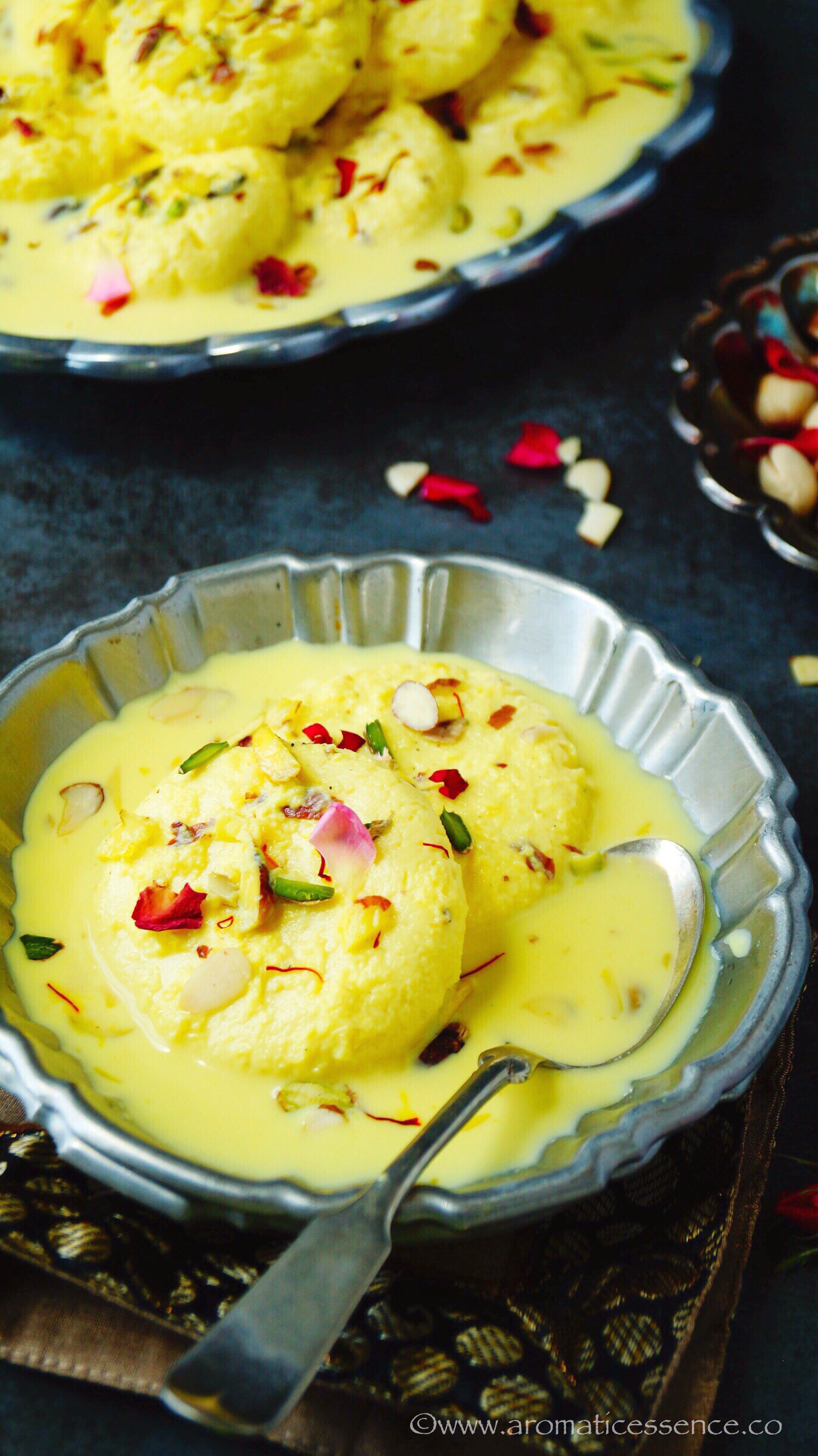
Rasmalai is basically soft, spongy cottage cheese cakes doused in sweetened, thickened milk infused with exotic flavors of cardamom and saffron!
Ingredients needed to make this classic Bengali sweet
Indian sweet rasmalai calls for few ingredients i.e. milk, lemon juice/white vinegar/yogurt (to curdle the milk), sugar and flavorings like saffron, cardamom, rose water along with some nuts for texture and garnish.
Then there is also a Pakistani version of rasmalai with eggs and milk powder. However, the Bengali rasmalai recipe sticks to the ingredients I have mentioned above and does not use eggs traditionally.
I’ve also come across recipes of rasmalai with ricotta cheese, however, I’ve yet to try that. I’m sure that tastes great as well!
How to prepare rasmalai?
I’ve made rasgullas successfully a couple of times earlier, so I wasn’t really apprehensive about making rasmalai.
To make rasmalai you just need to take it a step further and prepare the sweetened milk which is basically a no-brainer! All you have to do is simmer the milk until it reduces by 75 % of its volume, then sweeten and flavor it. That’s about it!
You can also make angoori rasmalai with this same recipe. Simply make smaller sized chenna balls, a little smaller than the size of a grape, as they will expand on cooking. Angoor means grapes in Hindi, and that’s the size angoori rasmalai should be. A nice bite-sized dessert 🙂
Now let’s get to the point, I’ll be talking in the context of rasgulla because that is basically what the malai of rasmalai is! It made me realize I should have shared a post on rasgulla first, that would have made things easier, but nevertheless, I’ll add all the important tips here.
To sum it all up, this is a gist of the entire procedure of making rasgulla
- Boiling the milk
- Curdling the milk
- Straining the whey
- Hanging the chenna (paneer)
- Kneading the chenna (paneer)
- Forming paneer balls
- Making the sugar syrup
- And finally, cooking the paneer balls in boiling sugar syrup.
Sounds easy right? But trust me a lot of people fail at the last part i.e boiling or the cooking of the rasgulla. And they do not know why! So sit back with your favorite beverage, and enjoy the rest of the post as I try to cover up as much as possible.

Easy, alternative ways to make rasmalai
Now, if you don’t like sticking to the traditional recipe, or have tried making rasmalai earlier only to have disastrous results and don’t feel like venturing to make rasmalai from scratch again, here are some easy alternatives for you.
- How to make rasmalai from rasgulla – Make your work easier by using store-bought rasgullas or the ones that come in cans. Squeeze out all the sugar syrup and dunk them in the ‘ras’ to absorb all that sweet, flavored milk, thereby transforming the plain rasgullas to rasmalai. You can also use condensed milk along with regular milk to make the ras, this will make the ras richer. So adjust the sugar, and keep in mind, condensed milk is thick, so do not cook the milk for a long time, as we do not want the ‘ras’ to thicken too much.
- Bread Rasmalai – If you thought making rasmalai from canned rasgulla was relatively easier, then this bread rasmalai is a breeze too! Simply cut out rounds of white sandwich bread using a cookie cutter, and pour the ras over the bread just before serving. Easy, right? The spongy bread mimics the texture of the traditional ‘malai’ of rasmalai. So it is a great alternative to make rasmalai.
- Rasmalai ready mix – Honestly, I still haven’t tried ready mix packets to make rasmalai. Most of these come with instructions on the back of the pack, so it should be pretty easy to follow.
There are ways to make quick rasmalai, but if you ask me, I will still suggest making rasmalai from scratch if you really want to enjoy it in the best form. I do not recommend making rasmalai with readymade paneer.
To make any of these Bengali sweet recipes with milk like rasgulla or rasmalai, you need fresh, soft chenna aka paneer. So don’t even waste your time and energy making this sweet from readymade paneer, make some delicious curry with that paneer instead.
Make the chenna at home, it hardly needs much effort and the results are highly rewarding 🙂
I know rasgullas are difficult to tame, but I guess the rasgulla Gods may have been super kind to me! Jokes apart I did my study well before attempting these!
I did badger my Bengali friend, Ujjaini too with my queries, and she was kind enough to oblige 🙂

Tips to make the best rasmalai at home
Choosing the correct type of milk
Good quality cow’s milk is what my friend, Ujjaini suggests. Preferably full cream, because indirectly it will make good quality paneer. Buffalos milk should be avoided, you can use that for the preparation of the ras aka masala doodh instead.
The right time to add lemon juice or vinegar
Bring the milk to a boil, then switch off the heat and let it cool for about 5 minutes. Now is the time to add vinegar or lemon juice. Though here’s another tip, Ujjaini suggests using lemon juice for a better end result. Some people also dilute the lemon juice or vinegar, I’ve never done that and it has not affected the rasgulla in any way.
Adding vinegar or lemon juice to boiling milk will result in hard, chewier rasgullas , so avoid it.
Once you see the greenish whey separate completely, drain it as soon as possible. You do not want to let the curdled milk sit that way, which can also result in hard and chewy rasgullas.
Make sure you give the chenna a good wash under running water to get rid of the lemon juice/vinegar taste.
Straining the prepared chenna (paneer)
I usually keep the paneer for around 30 mins to drain. You should not see any more water droplets falling. Once you open the assembly, the paneer should have formed a ball and it should be slightly dry, crumbly plus you should feel some moisture. It shouldn’t be pasty. If it is too pasty, it needs to be drained for a longer time. Please refer to pics in the step by step instructions.
Kneading the chenna
- This is one of the most critical steps which can result in either perfect rasgullas or it can go haywire and you will end up with disastrous results.
- You have to knead until you get a smooth, non-sticky dough, neither too hard nor too soft, that just about begins to ooze out the fat. Do not overwork the dough. This easily takes around 8-10 mins.
- Use the heel of your palm and fingertips to knead the dough by dragging the chenna in a forward motion, then gather the chenna and keep doing this until you reach the smooth dough stage.
- Alternatively, you can transfer the chenna in the blender and pulse it for 10-15 seconds, for 5 to 6 times or until it forms a dough ball. Then transfer to a plate and knead for another minute or two.
Making crack free balls
Squeeze and press a portion of the dough in your palm to make it compact. Then start rolling it using both your palms to form a smooth, round ball. Little cracks are allowable, but if it is too much, knead the chenna for few more minutes. If you find the dough too dry, sprinkle few drops of water and knead.
The apparatus to cook the rasgullas
- The pot has to be big enough to accommodate the rasgullas. I like to use a wide pot with a see-through lid to keep a watch on the rasgullas.
- If the pot is overcrowded, the rasgullas will lose their round shape and they won’t have room to expand and thus become flat. This doesn’t matter much in terms of shape for rasmalai, but it is a good practice to judge the number of rasgullas that would go in a pot and cook in batches if required.
The consistency of sugar syrup
- You may need to double or triple the sugar syrup depending upon the size of your pot or pan, always remember that the syrup must be filled to at least 3/4th of the vessel.
- For rasgulla, I usually follow a 1: 2:: sugar: water ratio, but for rasmalai, I’ve followed a 1:4 :: sugar: water ratio to cook the paneer balls, as later they are going to be dunked in the sweetened milk i.e ras which is sweet enough.
Cooking rasgullas
This is a critical step to make sure you have perfect rasgullas.
It has to do with the temperature of the sugar syrup. You want the syrup to be boiling in full swing when you put the rasgullas in. Rasgullas cook in foam.
Another important tip shared by Ujjaini is to avoid opening the lid or stirring or meddling with the rasgullas once you put them in the pan to cook. Cover and let them cook undisturbed for around 15 minutes. Then let them cool down for about 30 minutes.
Opening the lid can cause the rasgullas to shrink, as they come in contact with air.
You can also use a pressure cooker to cook rasgullas, though I’ve never tried cooking them that way. I love watching them fluff up and expand through the see-through lid. I never cease to do a little happy dance when that happens 😀
Cook rasgullas in two batches if you have to, as they need space to expand. The quantity of sugar syrup will reduce, so simply add some more water and bring it to a boil again before putting the other batch in.
The consistency of milk for ‘ras’
I recommend reducing the milk to 75 % of its original quantity. You do not want to make it thick like rabri , because that will inhibit the paneer balls from absorbing any ‘ras’.
Important: A simple test for beginners attempting rasgullas/rasmalai
Do a small test! Drop one paneer ball in the boiling sugar syrup, if it cooks and doubles up without breaking or scattering in the syrup, you are good to go with the rest of the batch!
Do remember to keep the other paneer balls covered with a clean and damp kitchen napkin.
Why did my rasgulla still scatter in the syrup?
If you did not test for a single rasgulla and put the whole batch in, or it failed in the single test; The answer to that is in k neading the chenna mentioned above, if there was a lot of moisture in the paneer, chances are you may have ended up with a super soft moist dough, with not much to bind it, it scattered in the syrup. Pay very close attention to the final dough. Too moist and it will scatter, too dry and that will result in a dry rasgulla.
If you are attempting these for the first time, you can add about 2 teaspoons of cornstarch to the chenna and knead the dough. This will absorb excess moisture plus help in binding the dough. I, however, do not use cornstarch.
This is pretty much it about rasgullas, once they have cooked and doubled in the sugar syrup, you can let them chill before serving. But for rasmalai, you need to squeeze out all the sugar syrup before putting them in the sweetened milk, which is why it is good to cook them in light sugar syrup.

As I had promised in my eggless rasmalai cake post, I would be sharing an easy rasmalai recipe, so here it is!
I hope you guys found all the tips and tricks to make perfectly, soft and spongy rasgulla or rasmalai handy. I’d love to know if there are other specific things you follow if you have been making them successfully for a long time.

Below is a detailed step by step rasmalai recipe. Do give this wonderful Indian cheese dessert a go!

- Instant shahi rabri
- Kalakand
- Instant Mango Shrikhand
- No-cook Kulfi
- Faluda
- Kesar peda
- Chocolate peda
- Badam pista burfi
How to make soft rasmalai at home – Step by step instructions
For the ‘Ras’
Step 1: Reduce the milk
Heat 4 cups of full-fat milk in a heavy-bottomed pan over medium heat, stirring occasionally, bring the milk to a boil, then reduce the heat and cook until it reduces to at least 75 % i.e. 3 cups approx.

Step 2: Prepare saffron-infused milk
While the milk is reducing, take a tablespoon of the hot milk from the pan and add it to a bowl containing the saffron. Mix it well, to extract its flavor and color into the milk. Set the bowl aside while the milk continues to cook.

Step 3: Add sugar to reduced milk
Once the milk has reduced to 75%, add 1/2 cup sugar, mix to dissolve the sugar.

Step 4: Add saffron-infused milk, nuts, food color, and cardamom
Add the saffron milk, 2 tablespoons each of sliced almonds and pistachios, 3-4 drops of food color, and 1/4 to 1/2 teaspoon of ground cardamom, cook another minute. Then switch off the heat and set the pan aside to cool down.

For the light sugar syrup
Step 1: Add water and sugar in a pan
Add 6 cups of water and 1.5 cups of sugar in a wide mouth pan, mix well to dissolve the sugar completely. Bring to a rolling boil.

For the paneer/chenna balls
Step 1: Boil milk
Bring 1.5 liters of full-fat milk to boil in heavy-bottomed pot/pan. Stir in between to avoid the milk from burning or sticking at the bottom of the vessel.

Step 2: Lemon juice or vinegar
Once the milk boils, switch off the heat and let it stand for about 5 minutes. Now add vinegar/ lemon juice, 1 tablespoon at a time, stirring with each addition, until the milk splits and you see the greenish whey. I needed about 2 tablespoons of lemon juice.


Step 3: Strain the split milk
Line a strainer with muslin cloth over a big bowl, drain the split milk, collect the whey. You can use this whey for kneading dough for bread’s/ chapatis or even make soup. Gather the edges of the muslin cloth, squeeze out the water ( exercise precaution as it will be very hot ). Wash the chenna well under running water to get rid of the vinegar or lemon juice smell.

Step 4: Drain the liquid
4.Make a knot/ or secure with a thread /rubber band and hang it for about 30 minutes. Do not let it dry completely, let it retain little moisture.

Step 5: Transfer fresh paneer to a bowl or plate
After 30 minutes, open the assembly, transfer it to a bowl, since it is fresh you can easily crumble the paneer with your hands. Set aside. (This yielded me 230 grams of paneer).

Step 6: Knead the chenna
Knead the chenna with the heel of your palm and fingertips by dragging in a forward motion until it is smooth. Scoop the chenna again and keep kneading with the heel of your palm until you feel the chenna starting to give out some grease/fat and it turns into a smooth and soft dough. You should be able to make a smooth ball with minimal cracks if it has been kneaded well. This will take around 10 minutes for the dough to come together. Alternatively, you can pulse the chenna 5-6 times in the mixer or food processor, until it forms a soft dough when you press the chenna with your hands. You do not want to do overdo the pulsing part.

Step 7: Make the chenna balls
Divide the dough into 12 equal parts. Roll out each in a smooth ball between your palms then flatten them gently. Set aside on a plate.

Prepare the rest in the same way.

Cooking the rasmalai balls
Step 1: Drop the balls in the boiling sugar syrup
Drop the prepared flattened balls, one at a time. Cover with the lid and let it cook on medium-high heat for 15 minutes until it absorbs the sugar syrup and doubles up in size. Remember the sugar syrup must be boiling when you put them in.


Step 2: Set the pan aside to cool down
Remove the pan from heat, leave it aside to cool down completely, at least 30 – 45 minutes. Do not touch the rasgullas, as they will be very soft at this stage. Let them stabilize.

Step 3: Test
I usually don’t check, because I can tell if they are done. I let them sit undisturbed for 30 – 45 minutes without opening the lid. To check if they are done, drop one rasgulla in a glass filled with clean water. If it sinks, it is done. If it floats, it needs to be cooked further.

They will come back to their original shape even after squeezing out the water.

Assembling Rasmalai
Step 1: Squeeze out the excess sugar syrup
Squeeze out the excess syrup from the rasgulla, with the help of a slotted spoon, or simply squeeze it out pressing it between your clean palms.

Step 2: Transfer it to the sweetened milk
Immediately transfer it to the ras, prepared earlier, which should have cooled down by now. Refrigerate the rasmalai for 3-4 hours or until you are ready to serve. The balls will soak up all the sweetness and aroma of the milk, best served chilled! Enjoy

Note
You can skip the saffron to make a regular rasmalai flavored with cardamom. You can add some rose essence instead.

You can also follow me on Facebook , Pinterest, Instagram & Twitter
Rasmalai Recipe | How To Make Rasmalai
Ingredients1x2x3x
For the ‘ras’- sweetened milk
- 4 cups whole milk
- 1/2 cup sugar, adjust as per desired sweetness
- 2 tablespoons sliced almonds
- 2 tablespoons sliced pistachios
- A fat pinch of saffron strands
- 1/4 to 1/2 teaspoon ground cardamom
- yellow food color optional
For the light sugar syrup
- 1.5 cups sugar
- 6 cups water
For the paneer
- 1.5 liters whole milk, preferably cow’s milk
- 2 tablespoons white distilled vinegar/lemon juice, or as required
For garnishing
- Dried rose petals, as required
- Few saffron strands
- 1 tablespoon sliced nuts
Instructions
For the ‘Ras’
- Heat milk in a heavy-bottomed pan over medium heat, stirring occasionally, bring the milk to a boil, then reduce the heat and cook until it reduces to at least 75 % i.e. 3 cups approx.
- While the milk is reducing, take a tablespoon of the hot milk from the pan and add it to a bowl containing the saffron. Mix it well, to extract its flavor and color into the milk. Set the bowl aside while the milk continues to cook.
- Once the milk has reduced to 75%, add the sugar, mix to dissolve the sugar.
- Add the saffron milk, the nuts,food color, and the cardamom powder, cook another minute. Then switch off the heat and set the pan aside to cool down.
For the light sugar syrup
- Add water and sugar in a wide mouth pan, mix well to dissolve the sugar completely. Bring to a rolling boil.
For the paneer/chenna balls
- Bring milk to boil in heavy bottomed pot/pan. Stir in between to avoid the milk from burning or sticking at the bottom of the vessel.
- Once the milk boils, switch off the heat and let it stand for about 5 minutes. Now add vinegar/ lemon juice, 1 tablespoon at a time, stirring with each addition, until the milk splits and you see the greenish whey.
- Line a strainer with muslin cloth over a big bowl, drain the split milk, collect the whey. You can use this whey for kneading dough for bread’s/ chapatis or even make a soup. Gather the edges of the muslin cloth, squeeze out the water (exercise precaution as it will be very hot). Wash the chenna well under running water to get rid of the vinegar or lemon juice smell.
- Make a knot/ or secure with a thread /rubber band and hang it for about 30 minutes. Do not let it dry completely, let it retain little moisture.
- After 30 minutes, open the assembly, transfer it to a bowl, since it is fresh you can easily crumble the paneer with your hands. Set aside. (This yielded me 230 grams of paneer).
- Knead the chenna with the heel of your palm and fingertips by dragging in a forward motion until it is smooth. Scoop the chenna again and keep kneading with the heel of your palm until you feel the chenna starting to give out some grease/fat and it turns into a smooth and soft dough. You should be able to make a smooth ball with minimal cracks if it has been kneaded well. This will take around 10 minutes for the dough to come together. Alternatively, you can pulse the chenna 5-6 times in the mixer or food processor, until it forms a soft dough when you press the chenna with your hands. You do not want to do overdo the pulsing part.
- In the meanwhile, start making the balls. Divide the dough into 12 equal parts. Roll out each in a smooth ball between your palms then flatten them gently. Set aside on a plate.
- Prepare the rest in the same way.
Cook the rasmalai balls
- Drop the prepared flattened balls, one at a time. Cover with the lid and let it cook on medium-high heat for 15 minutes until it absorbs the sugar syrup and doubles up in size. Remember the sugar syrup must be boiling when you put them in.
- Remove the pan from heat, leave it aside to cool down completely, at least 30 - 45 minutes. Do not touch the rasgullas, as they will be very soft at this stage. Let them stabilize.
- I usually don’t check, because I can tell if they are done. I let them sit undisturbed for 30 - 45 minutes without opening the lid. To check if they are done, drop one rasgulla in a glass filled with clean water. If it sinks, it is done. If it floats, it needs to be cooked further.
- They will come back to their original shape even after squeezing out the water.
Assembling Rasmalai
- Squeeze out the excess syrup from the rasgulla, with the help of a slotted spoon, or simply squeeze it out pressing it between your clean palms.
- Immediately transfer it to the ras, prepared earlier, which should have cooled down by now. Refrigerate the rasmalai for 3-4 hours or until you are ready to serve. The balls will soak up all the sweetness and aroma of the milk, best served chilled! Enjoy
Notes
Nutrition

