This Instant Pot Thai Yellow Curry is creamy, aromatic, and flavorful, packed with tender chicken and veggies. Pair it with some white rice for a delicious and wholesome meal that is perfect for busy weeknight dinners.

Have you ever tried to recreate your favorite Thai restaurant dishes at home? If you haven’t yet then this Instant Pot yellow curry would be a great place for you to start. It is not as spicy as the green and red counterparts, making it perfect for folks who avoid spicy foods.
This Instant Pot Thai yellow curry is delicious, warm, mildly spiced, and comforting. It is everything you’d want from a curry. To top it off, the weather is just right to enjoy some delicious curry recipes. Honestly, we enjoy curries all year round at home!
To make any sort of Thai curry you need a curry paste which is usually made by pounding ingredients in a certain order in a big mortar and pestle. Grinding the ingredients in a blender does not yield the same results, but kind of works in a pinch.
Sometimes, it is not easy to source the ingredients that go into an authentic Thai paste. So, I think it’s perfectly fine to use jarred or canned curry pastes. In fact, as per my knowledge, most people in Thailand do use packaged curry pastes.
These readymade pastes are as close to the real deal and a true savior at times when you don’t want to cook a Thai curry from scratch.
If you are lucky enough to source most of the ingredients and are feeling adventurous, you can easily make a big batch of this yellow curry paste and freeze it in ice cube trays, use two to three cubes to make a pot of curry!

- Why you will love this recipe?
- Ingredients needed
- How to make Instant Pot Thai Yellow curry with chicken – Step by step process
- Storage suggestions
- Serving suggestions
- Recipe Notes and tips
- Frequently asked questions (FAQs)
- You may also enjoy these Instant Pot curry recipes
- Instant Pot Thai Yellow Curry With Chicken
Why you will love this recipe?
This Instant Pot Thai yellow curry
✓ Is quick and easy, tastes pretty close to your favorite restaurant-style Thai curry
✓ Is mildly spiced as compared to the green or red Thai curry
✓ Does not need a lot of prep work
✓ Satisfies your curry cravings
✓ Can be made into a wholesome one pot meal by cooking the rice using the Pot in pot (PIP) method

Ingredients needed
To make this delicious Instant Pot yellow chicken curry you will need;
Cooking fat: I’ve used coconut oil. You can use any other oil of your choice.
Thai yellow curry paste : I love Mae ploy Thai curry paste. I used this while I was in the US. Unfortunately, it is not easy to source it where I’m at, so I’ve used whatever is available here (Blue Elephant brand) which worked equally well if not better.
Aromatics: Minced ginger and garlic! These are optional ingredients, but it builds the base flavor, so I recommend adding them.
Ground turmeric: Though the curry paste already has turmeric, I love to add a little more. It enhances the color of the curry. Never add too much turmeric or it can make the curry taste bitter. A little goes a long way!
Chicken: I’ve used boneless chicken breasts. Even boneless chicken thighs would be great here!
Coconut milk: A can of full-fat unsweetened coconut milk was used for this recipe. Coconut milk is added in two steps. In the first step, we need the thick coconut cream that’s on the top of the can to cook the curry paste. And in the second step, we use the rest of the liquid for the curry.
Vegetables: Traditionally Thai yellow chicken curry is made with potatoes. So that’s what I’ve used. I’ve also added carrots and red bell pepper. Some notes on the veggies;
- Onions: I’ve used red onions, but yellow or white would be good too.
- Potatoes: I’ve used yellow potatoes, but you can also use Russets if you like your potatoes to be a bit firmer.
- Carrots: Make sure you cut the carrots at least 1/2 inch thick or they will turn too soft. You could also use baby carrots.
Thai basil leaves: These have a strong, anise flavor as compared to sweet basil leaves. They add a pop of freshness to the curry. You may substitute with sweet basil if you can’t find them.
Kaffir lime leaves and lime juice: These add a zesty flavor that’s not too lemony but just enough to add a hint of brightness and acidity to the creamy coconut curry. I sourced mine from my DH’s garden 😀
Other ingredients: You will also need some fish sauce (don’t worry it will not make the curry taste fishy!) and palm sugar to balance the sweet, salty, and savory flavors.
Coconut cream: I love to add coconut cream towards the end as it makes the curry slightly creamier and richer.

How to make Instant Pot Thai Yellow curry with chicken – Step by step process
Step 1: Saute aromatics
Press the ‘SAUTE’ button, and set it to ‘NORMAL’. Once it displays, ‘HOT’, add 1 tablespoon of coconut oil. ( Photo 1 )
Add 1/2 tablespoon minced ginger and 1 tablespoon minced garlic, saute until fragrant, about 30-45 seconds. ( Photos 2 and 3 )

Step 2: Fry Thai yellow paste with coconut cream and ground turmeric
Add 3 tablespoons of curry paste, 1/2 cup thick coconut cream (from the top of the can), and 1/2 teaspoon ground turmeric. ( Photos 4 to 7 ).
Mix until well combined, fry the paste until the oil separates from the sides. ( Photos 8 and 9 )
Note: If you’ve already shaken up the coconut milk can, simply add 1/2 cup of the coconut milk and fry the paste.

Step 3: Add chicken and other ingredients (coconut milk, fish sauce, palm sugar, veggies, and kaffir lime leaves)
Add 1 lb diced chicken, mix well, cook for 1-2 minutes. ( Photos 10 and 11 )

Note: If you have any browned bits stuck at the bottom of the pot, be sure to deglaze it with about 1/4 cup of chicken stock to avoid any potential ‘BURN’ error. If not, proceed with the recipe.
Add the rest of the coconut milk (use a spatula or spoon if needed to scrape out everything). Mix well. ( Photos 12 to 13 )
Add 1 tablespoon of fish sauce and 1 tablespoon of palm sugar. ( Photos 14 and 15 )

Also, add 1 cup diced potatoes, 1 cup diced carrots, and 3-4 kaffir lime leaves (bruised lightly or torn). ( Photos 16 to 19 )

Mix well. Make sure the potatoes and carrots are chunky or they will get too soft. ( Photos 20 and 21 )

Step 4: Pressure cook
Press ‘CANCEL’ to switch off the “SAUTE’ mode.
Close the lid of the Instant Pot. Set the valve to ‘SEALING’. ( Photo 22 )
Pressure cook on high for 5 minutes. It will take some time for the pressure to build up (about 10 minutes), after which the timer will begin. ( Photo 23 )

Step 5: Natural pressure release (NPR) for 5 minutes followed by quick release
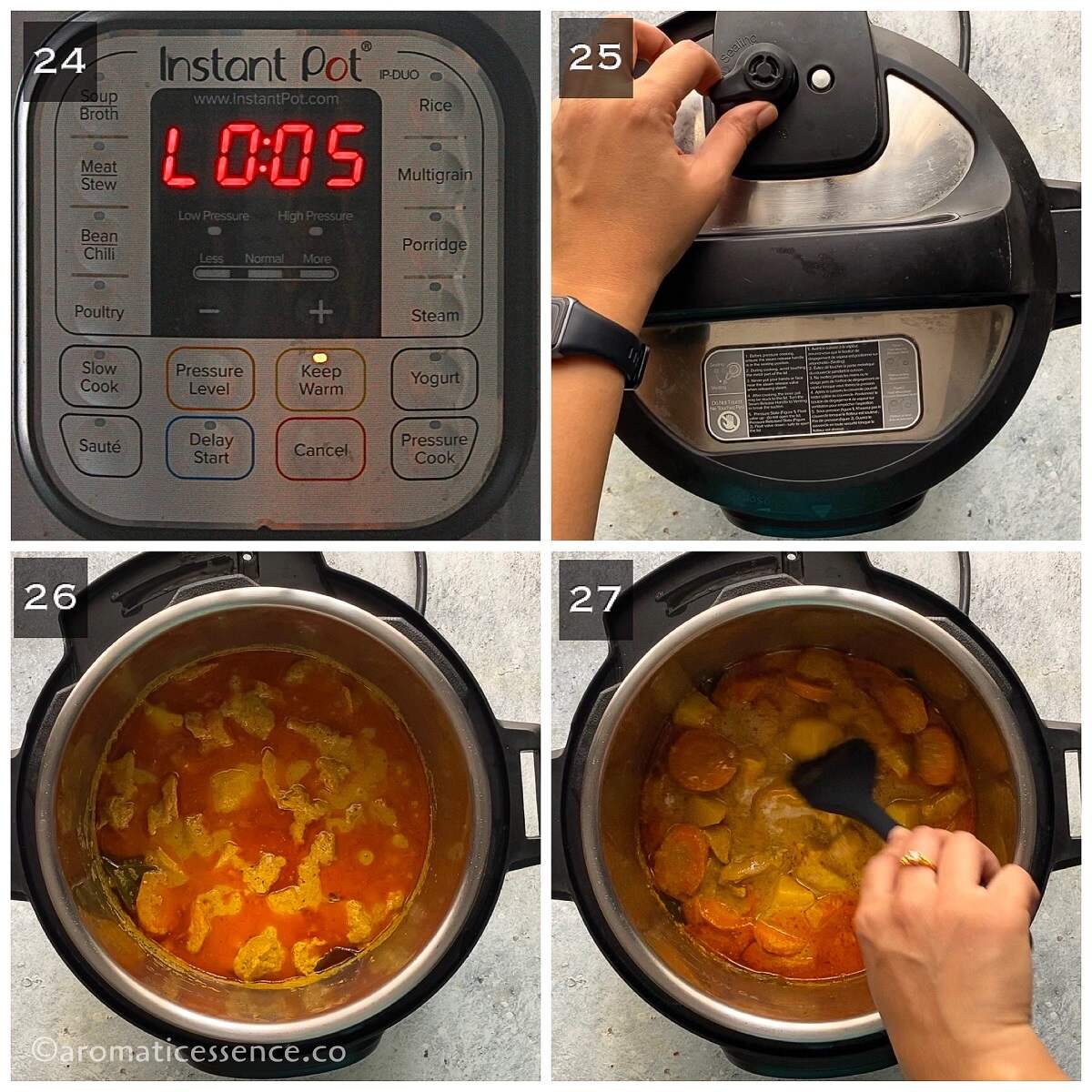
Once the cooking cycle is complete, let the pot depressurize for 5 minutes. Then do a quick release of the leftover pressure as per the manufacturer’s instructions. Press ‘CANCEL’ and switch off the IP. ( Photos 24 and 25 )
Once the silver pin drops, turn the knob to ‘VENTING’ and open the lid away from you.
You will find a layer of oil floating on top which is perfectly fine. Mix it well. ( Photos 26 and 27 )
Step 6: Add remaining ingredients
Turn on the ‘SAUTE’ mode, check for seasoning. Adjust with more fish sauce and/or palm sugar as required. I added another 1/2 tablespoon of fish sauce. ( Photos 28 and 29 )
I did not add more palm sugar as it was good enough for us. Mix well.
Next, add 1/2 cup of diced onions and 1/2 cup of sliced bell pepper, mix well, cook for 2 to 3 minutes, or until the veggies turn crisp-tender. ( Photos 30 and 31 )

Switch off the Instant Pot. Add 2 tablespoons of coconut cream and mix. ( Photos 32 and 33 )
Next, add 1/2 to 1 tablespoon lime juice, and 1/4 cup Thai basil leaves. Mix gently. ( Photos 34 and 35 )

Step 7: Serve
Check for seasoning again and adjust if needed. Serve hot. ( Photos 36 and 37 )
Check out some serving suggestions mentioned below.

Storage suggestions
Store leftovers in an airtight container in the refrigerator for up to 2 to 3 days.
I do not suggest freezing the curry, as the veggies would become limp and mushy and the potatoes would turn mealy. If you intend to freeze the curry, leave out the veggies. It will freeze well in an airtight container or freezer-safe bag for up to 3 months.
Thaw overnight in the refrigerator.
The curry thickens on refrigeration. Warm it in the microwave or transfer the curry to a pot and simmer on low heat until heated through. You can add 1/2 cup stock or coconut milk to thin it out. If you prefer a thinner curry, add 1 cup stock/coconut milk.
Serving suggestions
Serve this Instant Pot Thai yellow curry with;
- Rice: Jasmine, basmati, plain white rice, or brown rice. They all pair well with this Instant Pot yellow curry. Brown rice would not work for the PIP method, so you can cook that separately over the stove-top if you prefer brown rice.
- Quinoa
- Rice stick noodles
- Cauliflower rice
- With a flatbread of your choice

Recipe Notes and tips
Thai yellow paste: If you’d wish to recreate restaurant-worthy flavors at home, I strongly suggest using Mae Ploy or Meesri brand of Thai paste.
Refrigerate the can of coconut milk: Do not shake the can of coconut milk. You will need the thick coconut cream layer to cook the curry paste.
Fry the paste well: This is the most important step of this recipe. I experimented and tried to make it a dump-and-go recipe, but it didn’t work well. I highly suggest you do fry the Thai paste with the thick coconut cream. It helps in bringing out the flavor of the paste.
Heat: If you like a spicy curry, you will need to add Thai bird eye chilies, jalapeños, or serrano peppers (finely diced or slit lengthwise) along with the minced ginger and garlic in step 1.
Palm sugar: This sugar has a caramel-like distinct flavor that’s not as sweet as regular granulated sugar. You can substitute it with brown sugar.
Kaffir lime leaves: These leaves are aromatic and have a citrus flavor. You will need to tear the leaves to help release their citrus flavor. You can also bruise them lightly and add them to the curry. Kaffir lime leaves are easily available in Asian stores in the freezer section. If you can’t find it, skip it and add more lime juice toward the end. You can also substitute it with a teaspoon of lemon or lime zest.
Avoid overcooking after adding the veggies: The vegetables will continue cooking in the residual heat. Cook, depending on the thickness of the veggies. You want them to be crisp-tender. You could also saute them separately in a skillet or roast them in the oven and then add them to the curry.
Red/Green curry paste: You can use the same procedure to make Thai red or green curry!

Don’t I need extra liquid besides the coconut milk for the recipe?
I’ve tested this recipe with and without chicken stock. The recipe works perfectly fine without the additional stock. Generally speaking, Thai curries are not as thick as Indian curries. So it comes down to your personal preference.
If you prefer a thinner sauce, add 1/3 to 1/2 cup of chicken stock. If you prefer a thicker sauce, simply follow the recipe as is.
Since the newer Instant Pots are more sensitive to the “BURN’ error, I suggest adding about 1/3 cup of stock. You can always thicken the curry either by simmering it on ‘SAUTE’ mode or adding a cornstarch slurry or coconut cream towards the end.
Can I double the recipe?
Yes, you can! Just make sure that you don’t exceed the max line. The cooking time will stay the same.
Can I double the quantity of vegetables?
Yes, you can. But please note that you may not have enough sauce. You may need to add about half a can more of coconut milk. It may dilute the overall flavor of the curry, especially if you start off with less curry paste. Experiment and see what works for you.
Be sure to add quick-cooking vegetables like frozen green peas, snow peas, snap peas, squash, zucchini, etc after pressure cooking or they will turn too mushy.
How can I make a vegetarian version of this Instant Pot yellow curry?
Make sure you use a curry paste that does not contain shrimp paste. From the list of ingredients mentioned on the label, Mae Ploy and Maesri yellow curry pastes are vegan.
For a vegetarian version, swap the chicken with firm tofu and reduce the pressure cooking time to a minute with quick release. Use vegan fish sauce, soy sauce, or coconut aminos. Also, use vegetable stock in place of chicken stock. You can also use a can of drained and rinsed chickpeas.
Can I skip the curry paste and use curry powder instead?
No, you cannot use them interchangeably in this recipe. It will change the entire flavor and consistency of the curry. Additionally, Thai paste has a lot more ingredients as compared to curry powder. Yellow Thai paste is made with galangal, shallots, lemongrass, Thai chilies, garlic, coriander roots, shrimp paste, kaffir lime leaves, and spices.
You can add a teaspoon or two of curry powder along with the ground turmeric to enhance the flavor of the curry. But, you cannot use it as a substitute for Thai paste.
How can I fix a spicy Thai curry?
This curry is about 2/5 in terms of spiciness. Even my kids enjoy this Instant Pot yellow curry. If you are unsure, start off with 2 tablespoons of Thai yellow paste. If it is too spicy, you can do a couple of things like;
- Add more coconut cream or coconut milk towards the end.
- Adjust with more sugar and lemon juice to balance out the heat.
How to make this curry on the stovetop?
Use a heavy-bottomed pot or a dutch oven. Follow the same procedure up to step 3. Instead of pressure cooking, cover the pot with a lid, and cook for 15 to 20 minutes, stirring occasionally, or until the chicken and potatoes are cooked through. Then add the remaining ingredients.
You may also enjoy these Instant Pot curry recipes
Instant Pot chana masala
Instant pot brown lentil curry
You can also follow me on Facebook , Pinterest, Instagram & Twitter

Instant Pot Thai Yellow Curry With Chicken
Equipment
- Instant Pot DUO60 6 Qt 7-in-1
Ingredients1x2x3x
- 1 tablespoon coconut oil or vegetable oil
- 1/2 tablespoon minced ginger
- 1 tablespoon minced garlic
- 2.5 oz Thai yellow curry paste 3 tablespoons, you can use between 2 to 4 tbsp curry paste depending on your spice tolerance
- 1/2 teaspoon ground turmeric
- 13.5 oz can of full-fat unsweetened coconut milk refer notes
- 1-2 tablespoons fish sauce
- 1-2 tablespoons palm sugar substitute with brown sugar
- 4 kaffir lime leaves or 1 teaspoon of lime zest
- 1 lb boneless chicken breasts or thighs cut into 1.5-inch chunks
- 1 cup of diced potatoes 2 inch chunks
- 1 cup diced carrots 1/2 to 1-inch chunks
To be added after pressure cooking
- 1/2 cup red onion cut into chunks
- 1/2 cup sliced red bell pepper
- 2 tablespoons coconut cream optional
- 1/2 to 1 tablespoon lime juice
- 1/4 cup loosely packed Thai basil leaves
Instructions
- Press the ‘SAUTE’ button, and set it to ‘NORMAL’. Once it displays, ‘HOT’, add coconut oil.
- Add minced ginger and minced garlic, and saute until fragrant.
- Add 1/2 cup thick coconut cream (from the top of the can), curry paste, and ground turmeric. Mix until well combined, fry the paste until the oil separates from the sides.
- Note: If you’ve already shaken up the coconut milk can, simply add 1/2 cup of the coconut milk and fry the paste.
- Add diced chicken, mix well, cook for 1-2 minutes.
- Note: If you have any browned bits stuck at the bottom of the pot, be sure to deglaze it with about 1/4 cup of chicken stock. If not, proceed with the recipe.
- Add the rest of the coconut milk (use a spatula or spoon if needed to scrape out everything). Mix well.
- Add 1 tablespoon of fish sauce and 1 tablespoon of palm sugar.
- Add diced potatoes, diced carrots, and kaffir lime leaves (bruised lightly or torn).
- Mix well. Make sure the potatoes and carrots are chunky or they will get too soft.
- Press ‘CANCEL’ to switch off the “SAUTE’ mode.
- Close the lid of the Instant Pot. Set the valve to ‘SEALING’. Pressure cook on high for 5 minutes. It will take some time for the pressure to build up (about 10 minutes), after which the timer will begin.
- Once the cooking cycle is complete, let the pot depressurize for 5 minutes. Then do a quick release of the leftover pressure as per the manufacturer’s instructions. Press ‘CANCEL’ and switch off the IP. Once the silver pin drops, turn the knob to ‘VENTING’ and open the lid away from you.
- Turn on the ‘SAUTE’ mode, check for seasoning. Adjust with more fish sauce and/or palm sugar as required. I add another 1/2 tablespoon of fish sauce. I did not add more palm sugar as it was good enough for us. Mix well.
- Next, add diced onions and sliced bell pepper, mix well, cook for 3 minutes, or until the veggies turn crisp-tender.
- Switch off the Instant Pot. Add 2 tablespoons of coconut cream (optional), lime juice, and Thai basil leaves. Mix gently.
- Check for seasoning again and adjust if needed. Serve hot.
Video
Notes
Nutrition

Instant Pot Thai Yellow Curry With Chicken
Equipment
- Instant Pot DUO60 6 Qt 7-in-1
Ingredients
- 1 tablespoon coconut oil or vegetable oil
- 1/2 tablespoon minced ginger
- 1 tablespoon minced garlic
- 2.5 oz Thai yellow curry paste 3 tablespoons, you can use between 2 to 4 tbsp curry paste depending on your spice tolerance
- 1/2 teaspoon ground turmeric
- 13.5 oz can of full-fat unsweetened coconut milk refer notes
- 1-2 tablespoons fish sauce
- 1-2 tablespoons palm sugar substitute with brown sugar
- 4 kaffir lime leaves or 1 teaspoon of lime zest
- 1 lb boneless chicken breasts or thighs cut into 1.5-inch chunks
- 1 cup of diced potatoes 2 inch chunks
- 1 cup diced carrots 1/2 to 1-inch chunks
To be added after pressure cooking
- 1/2 cup red onion cut into chunks
- 1/2 cup sliced red bell pepper
- 2 tablespoons coconut cream optional
- 1/2 to 1 tablespoon lime juice
- 1/4 cup loosely packed Thai basil leaves
Instructions
- Press the ‘SAUTE’ button, and set it to ‘NORMAL’. Once it displays, ‘HOT’, add coconut oil.
- Add minced ginger and minced garlic, and saute until fragrant.
- Add 1/2 cup thick coconut cream (from the top of the can), curry paste, and ground turmeric. Mix until well combined, fry the paste until the oil separates from the sides.
- Note: If you’ve already shaken up the coconut milk can, simply add 1/2 cup of the coconut milk and fry the paste.
- Add diced chicken, mix well, cook for 1-2 minutes.
- Note: If you have any browned bits stuck at the bottom of the pot, be sure to deglaze it with about 1/4 cup of chicken stock. If not, proceed with the recipe.
- Add the rest of the coconut milk (use a spatula or spoon if needed to scrape out everything). Mix well.
- Add 1 tablespoon of fish sauce and 1 tablespoon of palm sugar.
- Add diced potatoes, diced carrots, and kaffir lime leaves (bruised lightly or torn).
- Mix well. Make sure the potatoes and carrots are chunky or they will get too soft.
- Press ‘CANCEL’ to switch off the “SAUTE’ mode.
- Close the lid of the Instant Pot. Set the valve to ‘SEALING’. Pressure cook on high for 5 minutes. It will take some time for the pressure to build up (about 10 minutes), after which the timer will begin.
- Once the cooking cycle is complete, let the pot depressurize for 5 minutes. Then do a quick release of the leftover pressure as per the manufacturer’s instructions. Press ‘CANCEL’ and switch off the IP. Once the silver pin drops, turn the knob to ‘VENTING’ and open the lid away from you.
- Turn on the ‘SAUTE’ mode, check for seasoning. Adjust with more fish sauce and/or palm sugar as required. I add another 1/2 tablespoon of fish sauce. I did not add more palm sugar as it was good enough for us. Mix well.
- Next, add diced onions and sliced bell pepper, mix well, cook for 3 minutes, or until the veggies turn crisp-tender.
- Switch off the Instant Pot. Add 2 tablespoons of coconut cream (optional), lime juice, and Thai basil leaves. Mix gently.
- Check for seasoning again and adjust if needed. Serve hot.
Video
Notes
Nutrition
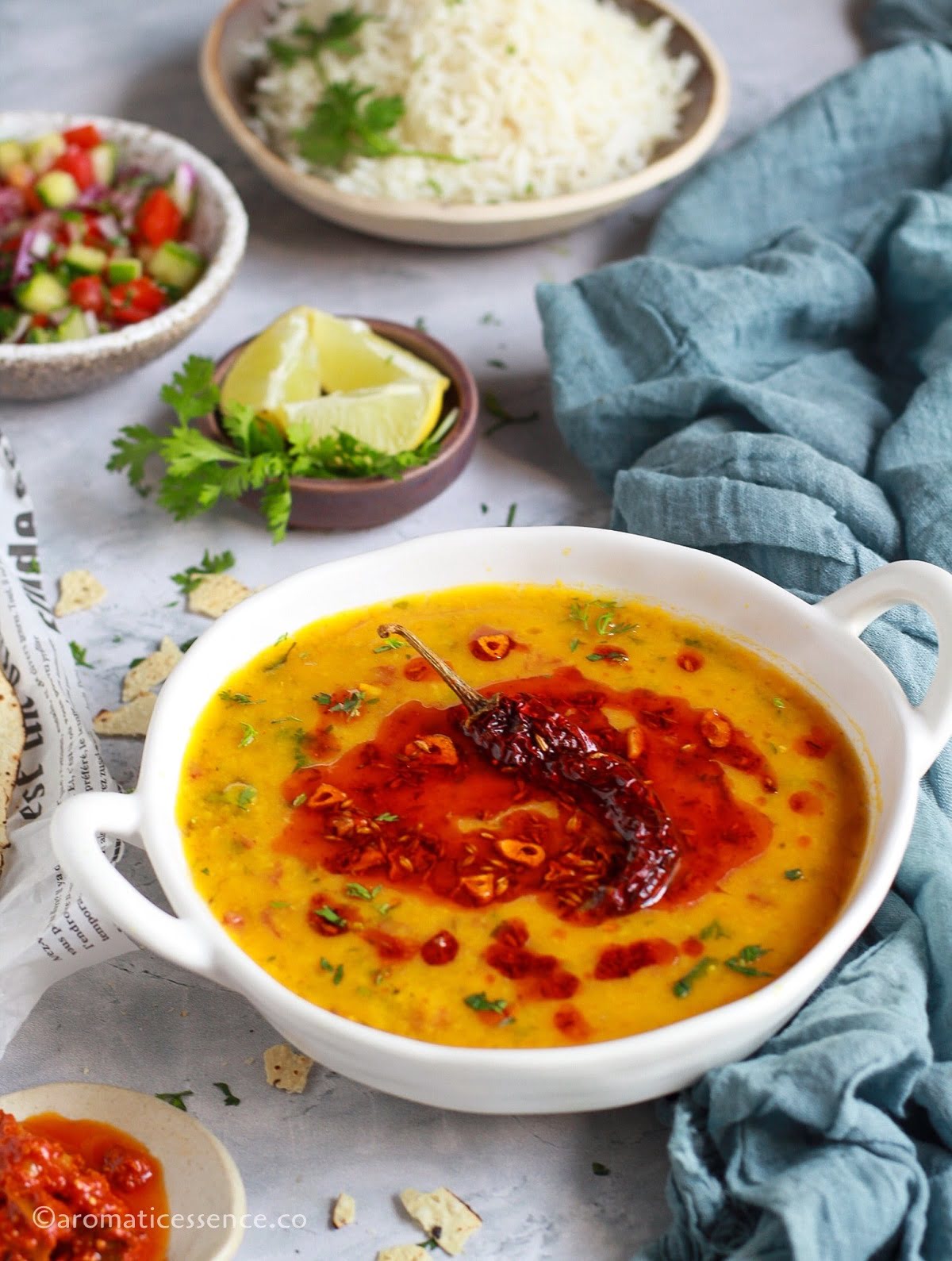
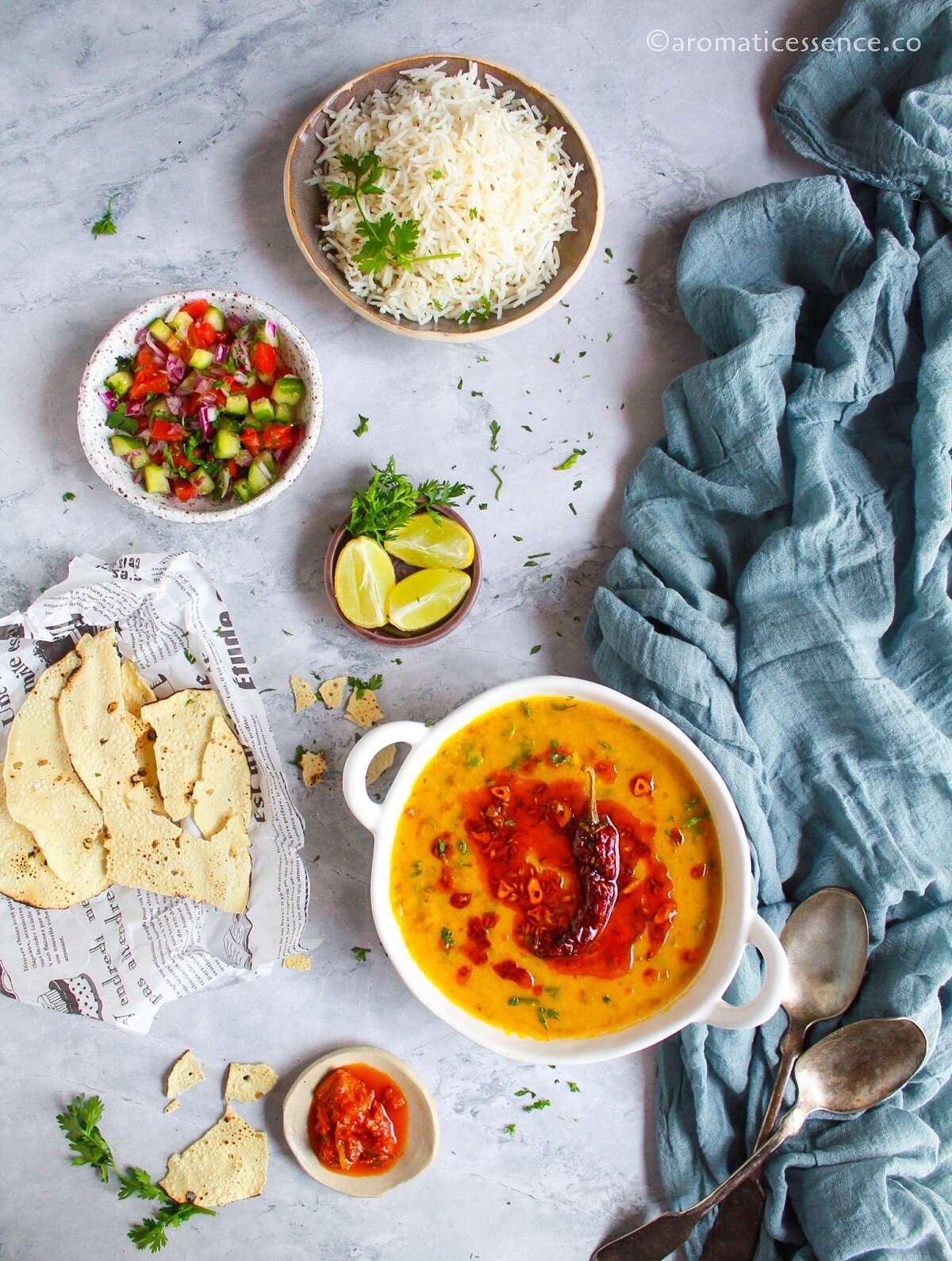
This creamy and comforting toor dal is one of the simplest and basic Indian lentil recipes made on a daily basis in most Indian households. It is nutritious, wholesome, really easy to prepare, and kid-friendly. The best part is that it comes together pretty quickly.
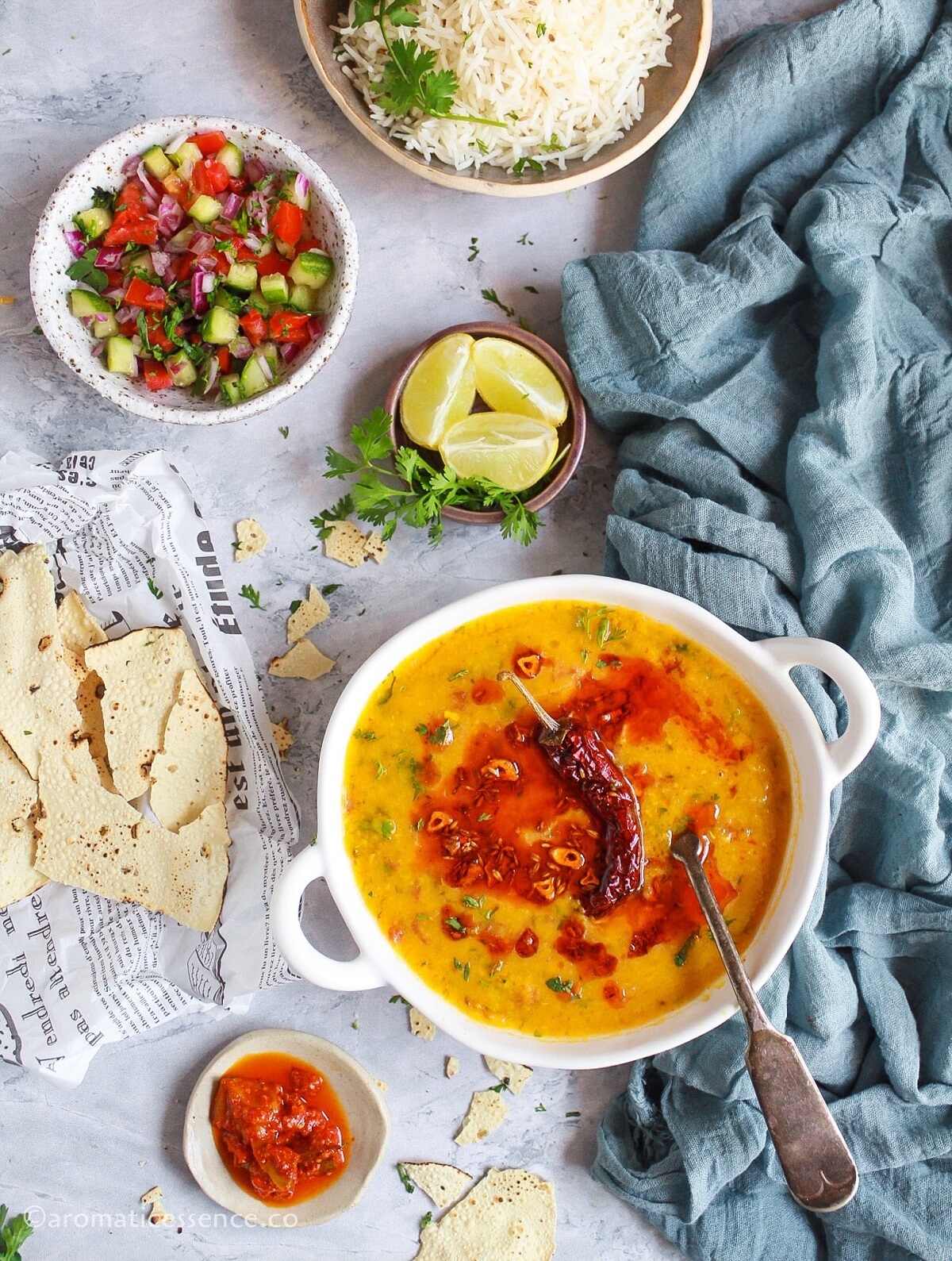
Dal-rice pairing is the epitome of Indian comfort food. It is the most sought-after meal after gorging on festive indulgences. Given that we are at the end of January, it has definitely been a while since most of us may have indulged in any fattening food.
Then a quick veggie-stir fry or omelet, kachumber (onion-tomato-cucumber salad), pickle, and papad are paired alongside to make it a wholesome meal.
- What is dal?
- What is toor dal?
- Why you will enjoy this recipe?
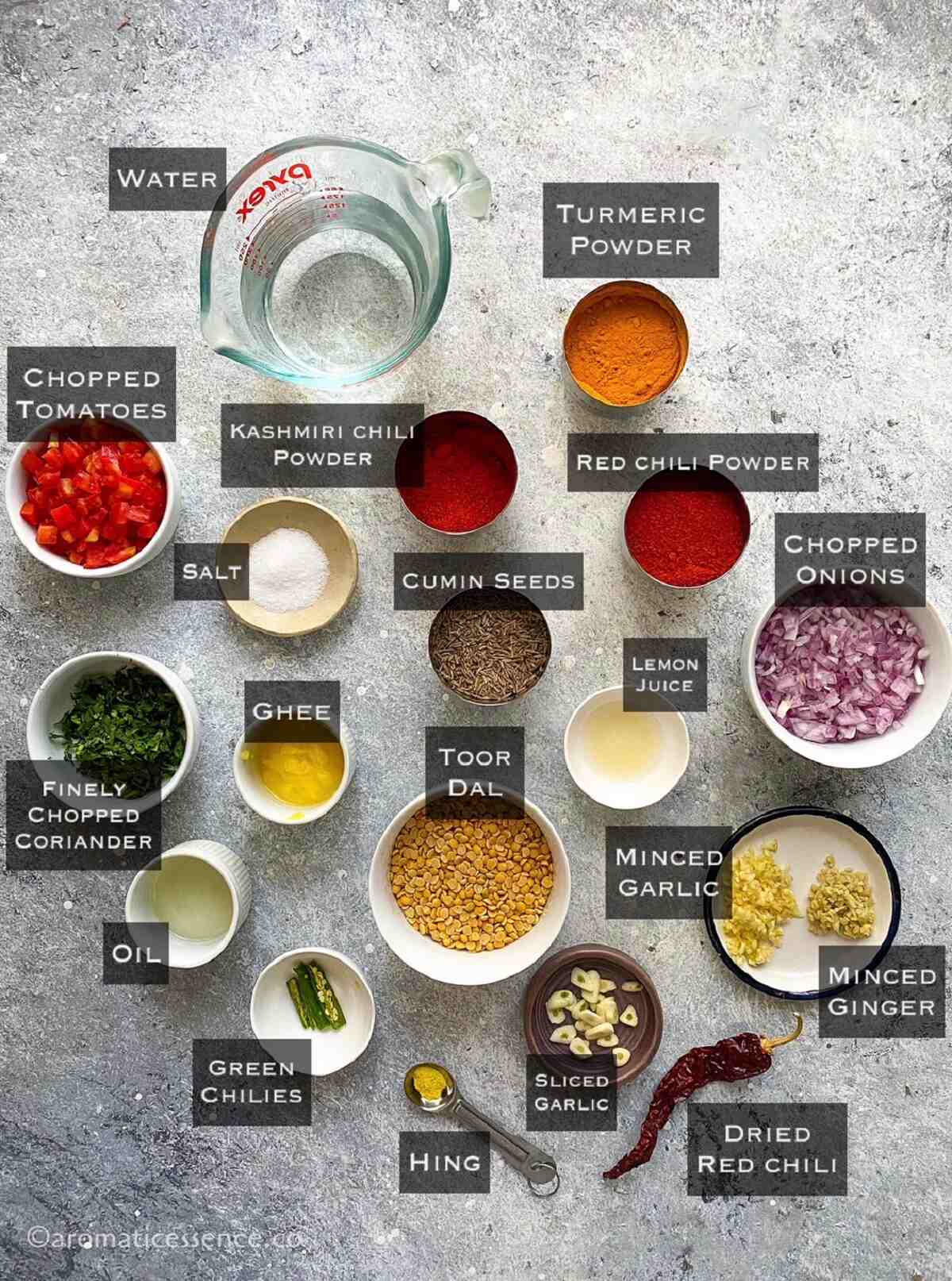
- Arhar dal ingredients
- How to make toor dal recipe – Step by step process
- Serving suggestions
- Storage suggestions
- Tips to make the best toor dal recipe
- Variations
- Frequently asked questions (FAQs)
- You may also enjoy these dal recipes
- Toor Dal Recipe | Arhar Dal {Stovetop + Instant Pot}
What is dal?
Dal is used as a generic term for two things;
- For dried split pulses, lentils, beans, and peas.
- For dishes like soups, curries, or stews made with the above. It is also referred to as dal, dhal, dahl, or daal.
You can make dal with one type or a combination of lentils. Dal is made practically every day in most Indian homes. The method of preparation differs regionally. So does the taste and consistency! But trust me, no matter which version you pick, you will enjoy a bowl of dal any time of the day, month, or year!
Very often a tadka is added over the prepared dal. Tadka , also known as tarka, baghar, or vaghar is nothing but a technique that involves frying whole and powdered spices in ghee/oil to release their flavors. This adds another layer of flavor to the already delicious dal.
What is toor dal?
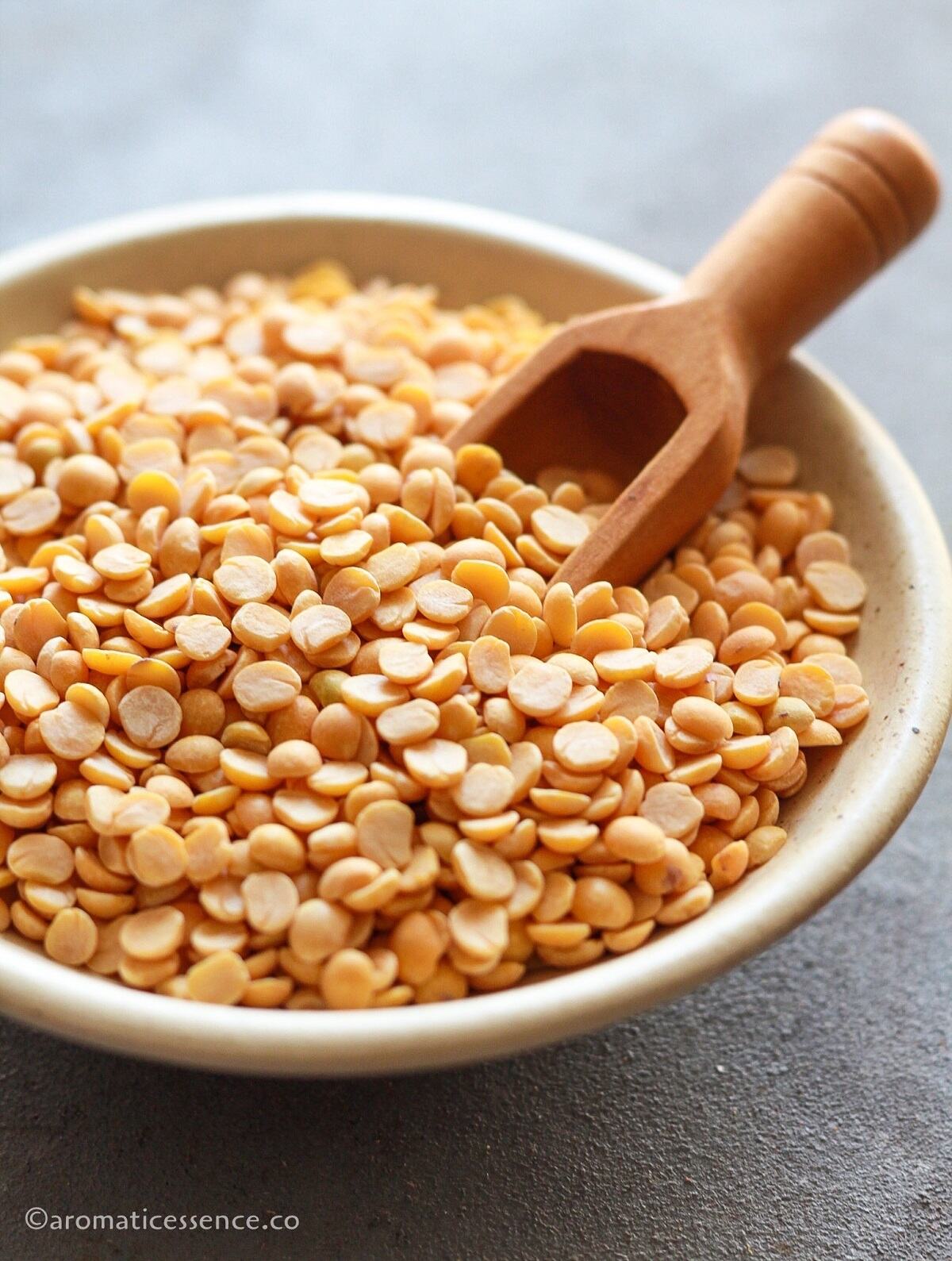
Split pigeon peas or yellow lentils are called toor dal in ‘Hindi’. It is also known as arhar dal, tuvar dal, tuar dal, tuwar dal, tur dal, toovar dal, or peeli (yellow) dal.
There are two ways in which you can make this toor dal recipe;
- Pressure cook the dal separately in water, salt, turmeric, and then add it to the 1st tempering i.e spiced onion-tomato masala (prepared separately in another pan).
- Cook the dal along with the onion tomato masala in the pressure cooker. This method makes it a one-pot dal recipe.
I’ll show you both the ways in this post. The first way is shown in the stovetop pressure cooker. And the second method uses the handy Instant Pot.
Of course, feel free to use your preferred method and equipment to make this yummy toor dal recipe.
Why you will enjoy this recipe?
☑ Toor dal is high in proteins and fibers making it a very healthy choice
☑ Simple yet delicious
☑ Can be adapted to make it vegan & gluten-free
☑ Really easy to prepare
☑ Can be made-ahead
☑ Can be paired with plain steamed rice and any veggie stir-fry of choice for a wholesome meal
☑ Very adaptable to suit your tastebuds, be sure to check variations below
Arhar dal ingredients
As I mentioned, there are many ways of preparing this toor dal recipe. I’m sharing the North Indian version, Punjabi version to be specific. I am sure that this is not the only version that’s made in Punjab, I’m just sharing my take on it 🙂
Toor dal: Since this recipe is all about toor dal, that is what I’ve used. I’ve used 24 Mantra’s organic tur dal. You can use a mix of toor dal, masoor dal, and moong dal. Totally up to you!
Aromatics: These are the usual suspects, i.e ginger, garlic, and finely diced onions. They add a delicious layer of flavor to this humble dal. You can skip the garlic and onions for a Jain version without altering the recipe. It still turns out just as delicious!
Chilies: I’ve used fresh green chilies in the first tempering and dried red chilies in the second tempering.
Tomatoes: Adds some acidity to the otherwise creamy dal.
Regular Indian spices: Whole and ground spices such as cumin seeds, ground turmeric, red chili powder, Kashmiri red chili powder which are the usual spices found in a typical Indian spice box. Along with these spices, you will also need salt.
Hing: Known as asafoetida in English, is added in small quantities in the preparation of lentils, legumes, and beans in Indian homes. It aids in digestion and adds an umami flavor.
Lemon juice: Adds a slight tang that lifts the flavor of the dal. It is optional but recommended.
Fresh herbs: Lots of freshly chopped coriander leaves, add a fresh element and aroma to the creamy dal.
How to make toor dal recipe – Step by step process
Stovetop Instructions
Step 1: Rinse and soak the toor dal
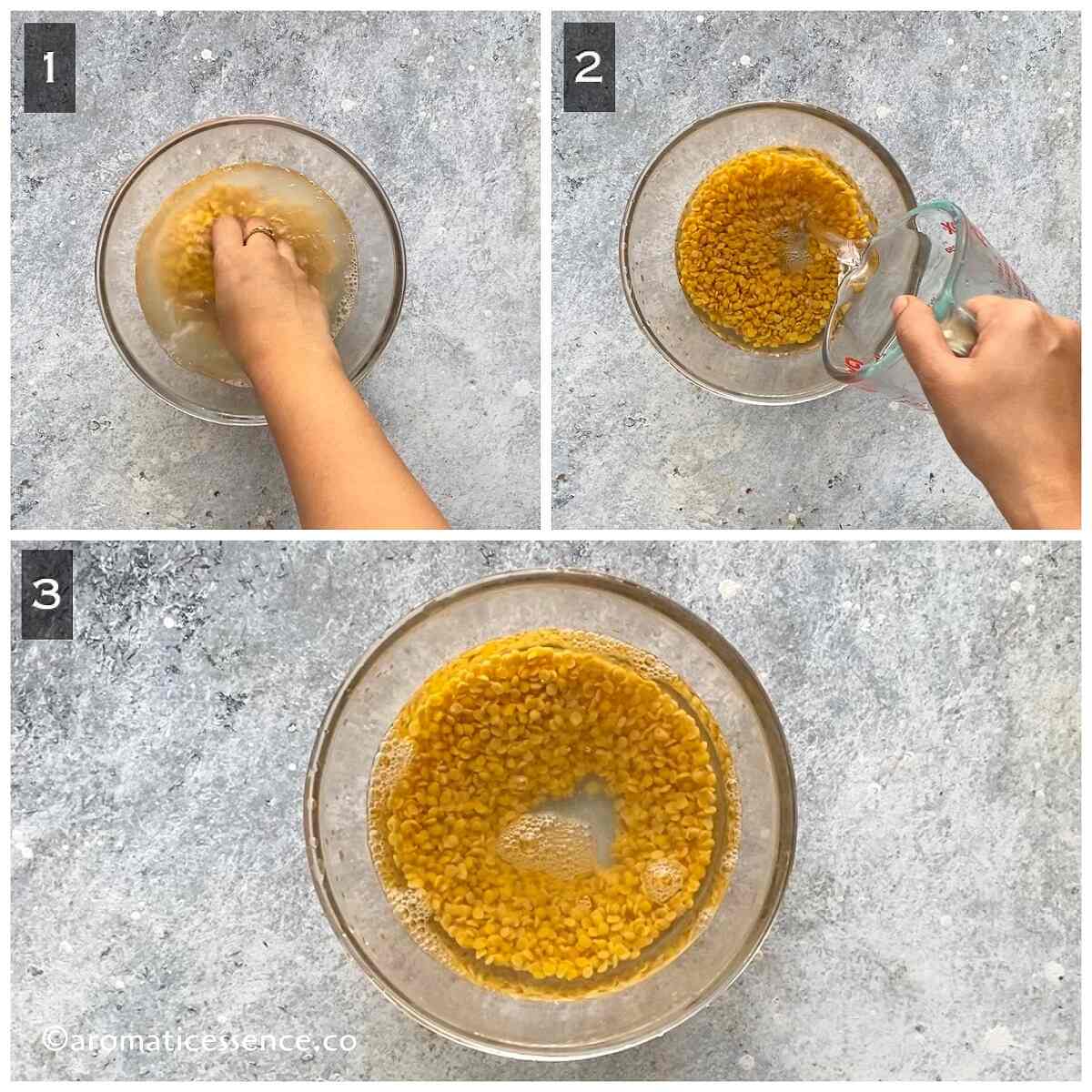
Rinse the toor dal well under running water until the water runs clear, then soak in about 2 cups of water for about 30 minutes. ( Photos 1 to 3 )
Step 2: Pressure cook the dal
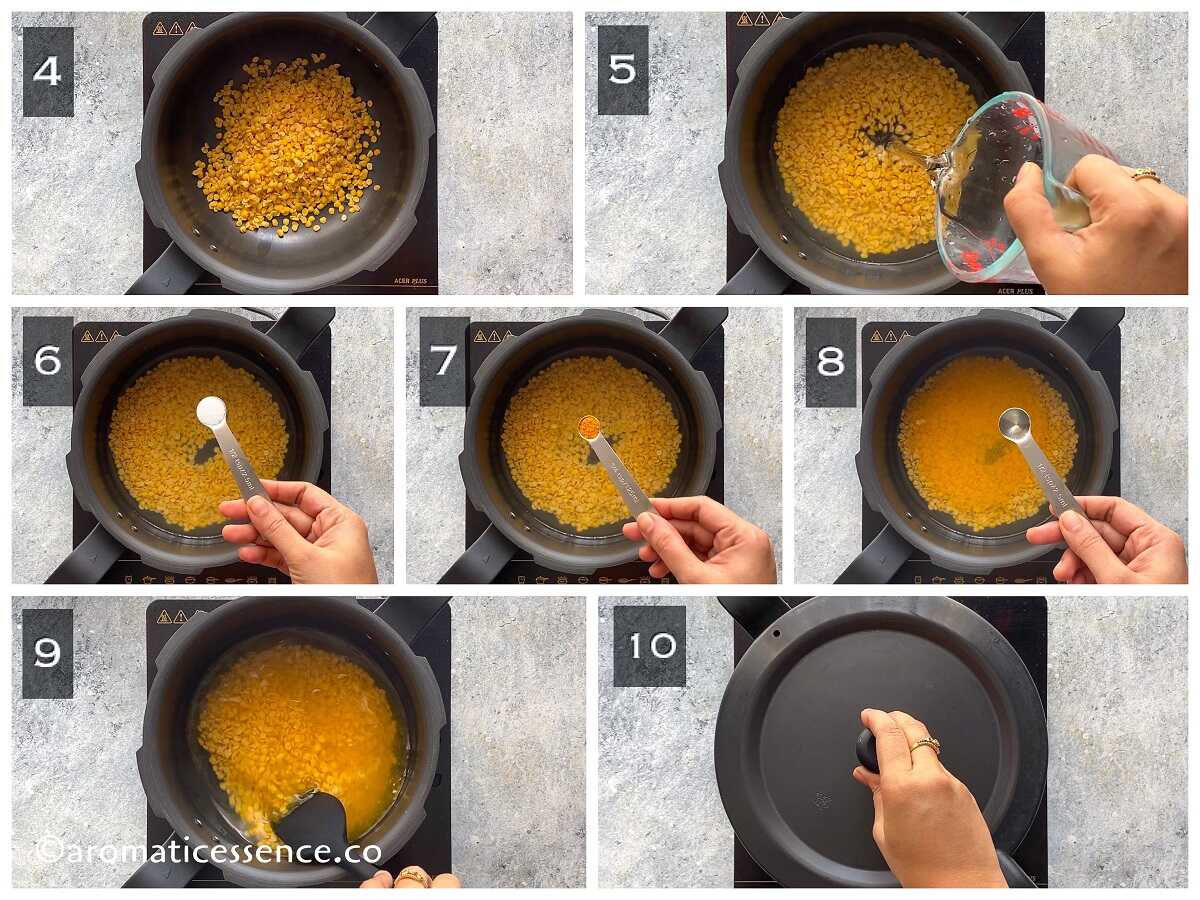
Transfer the drained dal to a pressure cooker. Add 1 & 1/2 cups of water along with 1/2 teaspoon salt, 1/4 teaspoon turmeric, and 1/2 teaspoon oil.
Adding oil prevents frothing and spilling from the pressure cooker.
Pressure cook the dal, for 3 whistles on high heat, then lower the heat and simmer for another 5 minutes. Switch off the heat and set the cooker aside. ( Photos 4 to 11 )
Once the cooker depressurizes, open the lid and whisk the dal using a wired whisk or a spatula until it is smooth. You may leave it as it is if you prefer it that way. ( Photos 12 to 14 )

Step 3: First tempering
Heat 1 tablespoon ghee in a heavy-bottomed Kadai or pot. ( Photo 15 )
Once hot enough, add 1/2 teaspoon cumin seeds. Wait for the cumin seeds to crackle then add 1/2 tablespoon minced ginger, 1 tablespoon minced garlic, and 2 slit green chilies.
Saute until ginger, garlic turn aromatic. ( Photos 16 to 20)
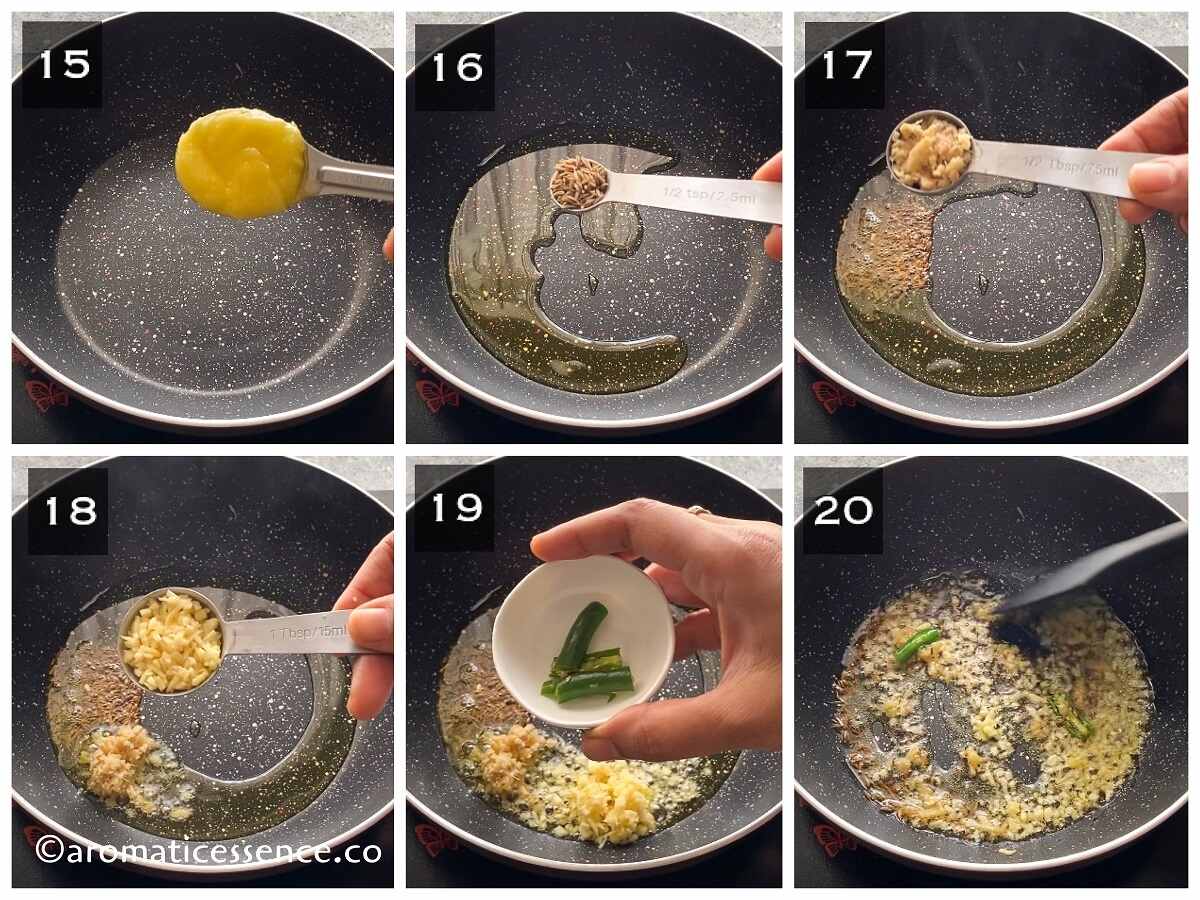
Add 1/2 cup finely chopped onions, sauté until it turns golden brown. ( Photos 21 and 22)
Next, add 1/2 cup chopped tomatoes and 1/4 teaspoon salt, sauté until it turns mushy. ( Photos 23 to 26)
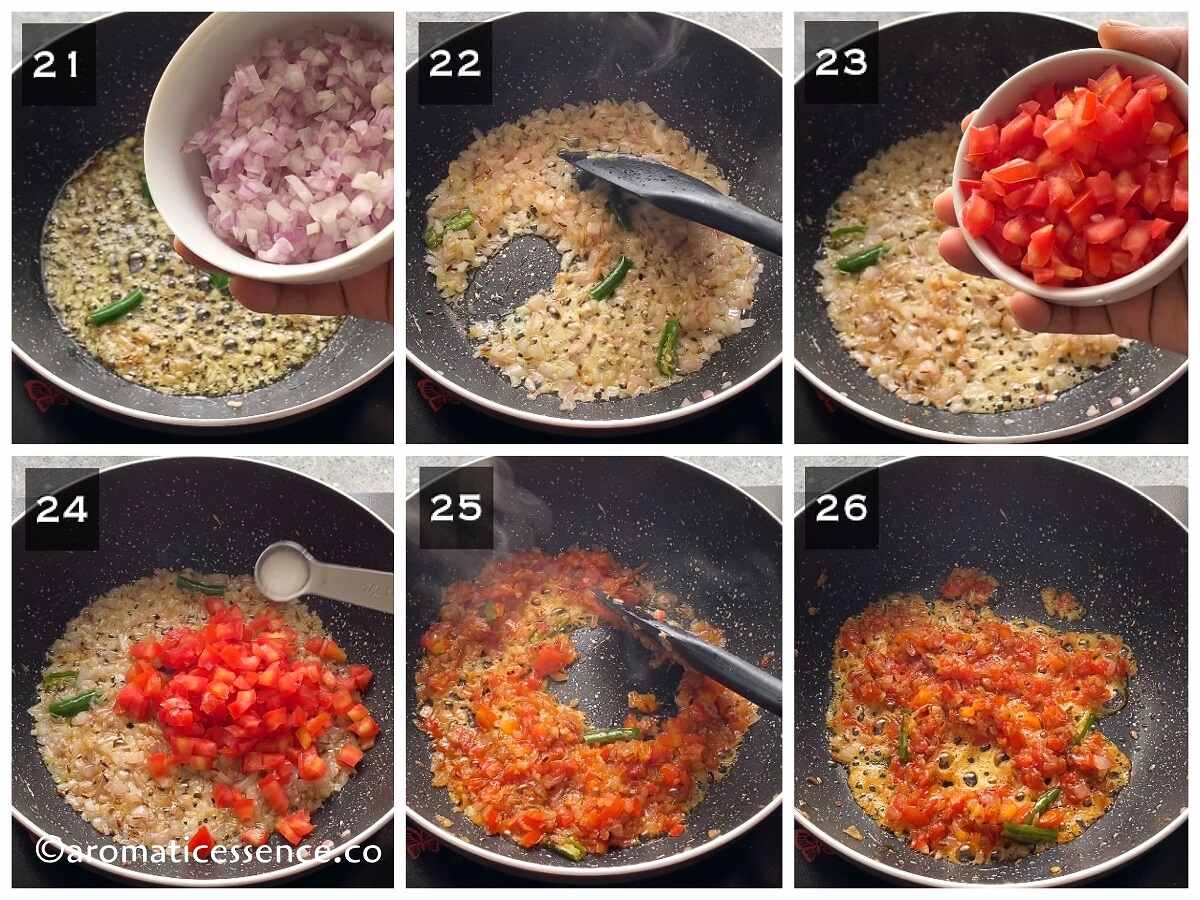
Add 1/4 teaspoon turmeric and 1/2 teaspoon red chilli powder, sauté for another 30 seconds. ( Photos 27 to 29)

Step 4: Add the cooked dal to the first tempering
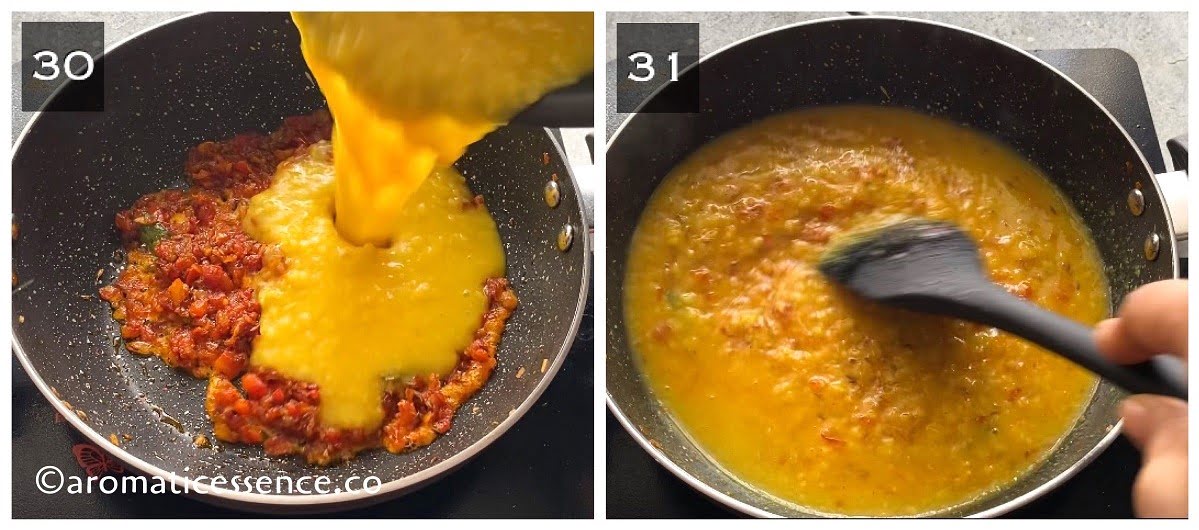
Next, add the cooked dal to the prepared tempering and give everything a good mix. ( Photos 30 and 31)
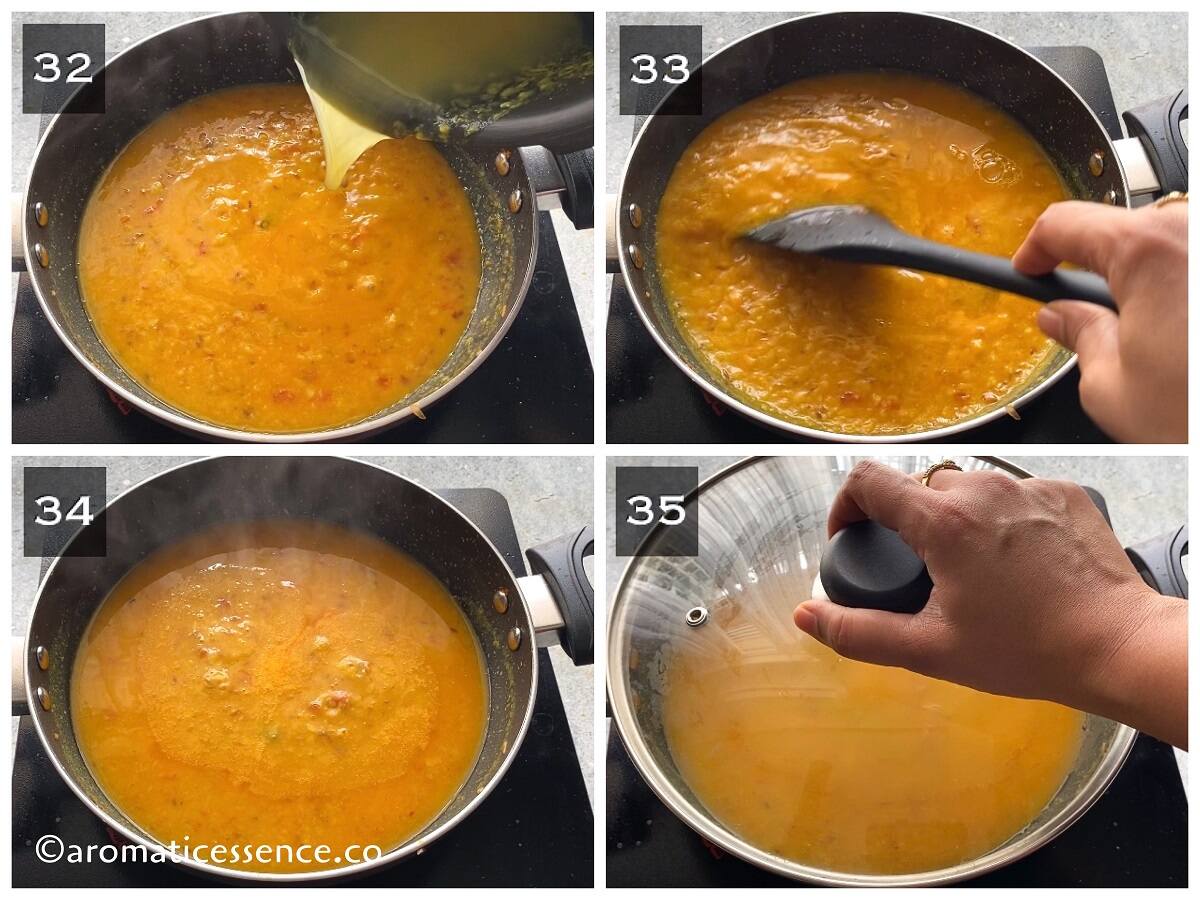
Add about 1/2 cup of water or as per desired consistency (I rinsed the cooker with 1/2 cups water). Bring it to a boil. Check for seasonings and adjust accordingly. ( Photos 32 to 34)
Reduce the heat to low, cover the kadai and simmer for another 5 minutes. ( Photos 35)
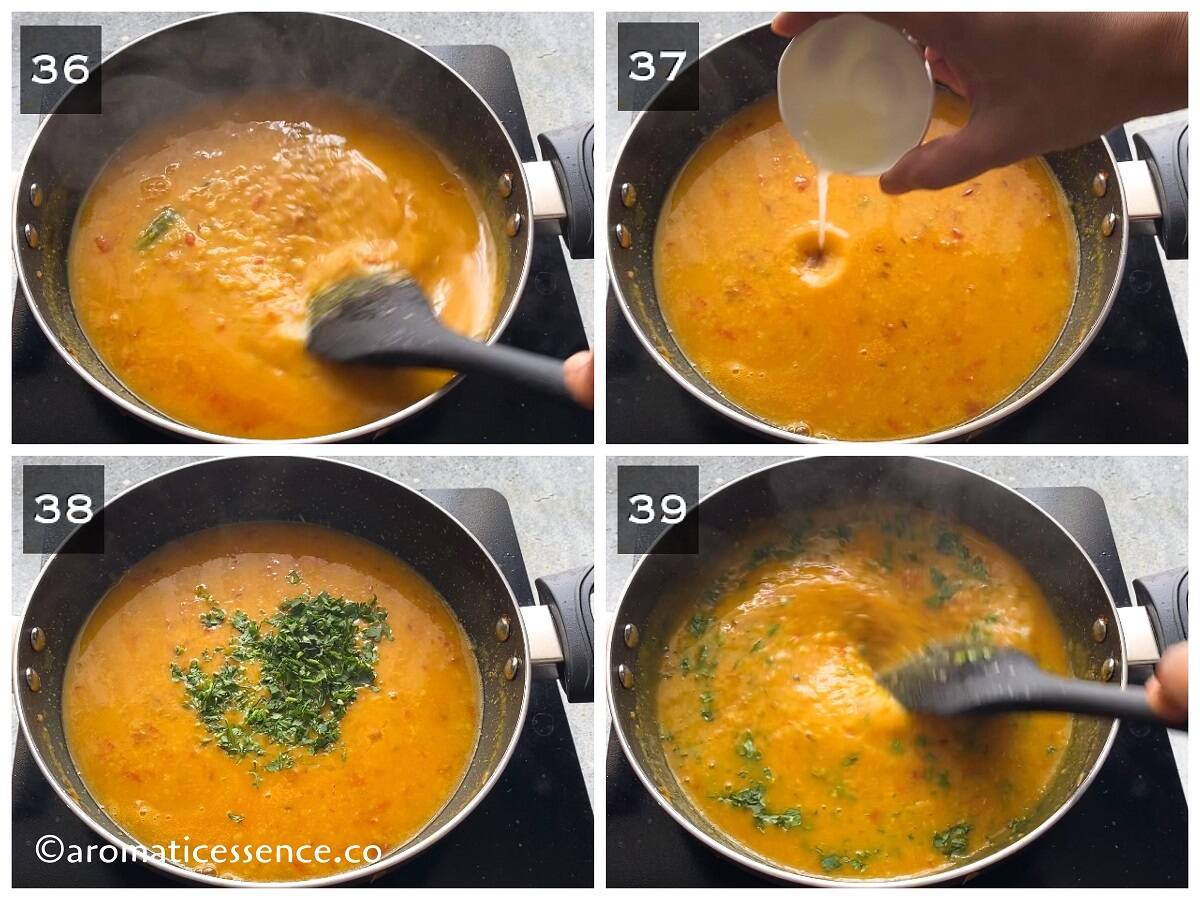
Open the lid and give the dal a good mix. ( Photo 36)
Switch off the heat. Add 1/2 tablespoon lemon juice and 2 tablespoons finely chopped coriander leaves, mix well. ( Photos 37 to 39)
Step 5: Second tempering (optional but recommended)
Heat 1 tablespoon ghee and 1/2 tablespoon oil in a tadka pan or a small pan over medium-low heat. ( Photos 40 to 41)
Add 1/2 teaspoon cumin seeds and allow them to crackle. Next, add about 2 teaspoons of sliced garlic, and 1 dried red chili. ( Photo 42)
Once the garlic starts to turn golden and the red chilies change color, add 1/8 teaspoon hing. Switch off the heat and add 1/4 teaspoon Kashmiri red chili powder. ( Photos 43 to 45)

Mix well and pour it over the dal immediately. Mix it well and serve hot with rice or any other flatbread.

Instant Pot Instructions
Follow the same process above for rinsing and soaking the yellow lentils. If you skip soaking, refer to the pressure cooking time mentioned below.
Step 1: Saute aromatics, tomatoes, and spices
Press the ‘SAUTE’ button, and set it to ‘NORMAL’. Once it displays, ‘HOT’, add 1 tablespoon of ghee. Add 1/2 teaspoon cumin seeds. ( Photo 46)
Wait for the cumin seeds to crackle, add 1/2 tablespoon minced ginger, 1 tablespoon minced garlic, and 2 slit green chilies. Saute until ginger, garlic turn aromatic. ( Photos 47 & 48)
Add 1/2 cup chopped onions, saute until golden brown. ( Photos 49 and 50)

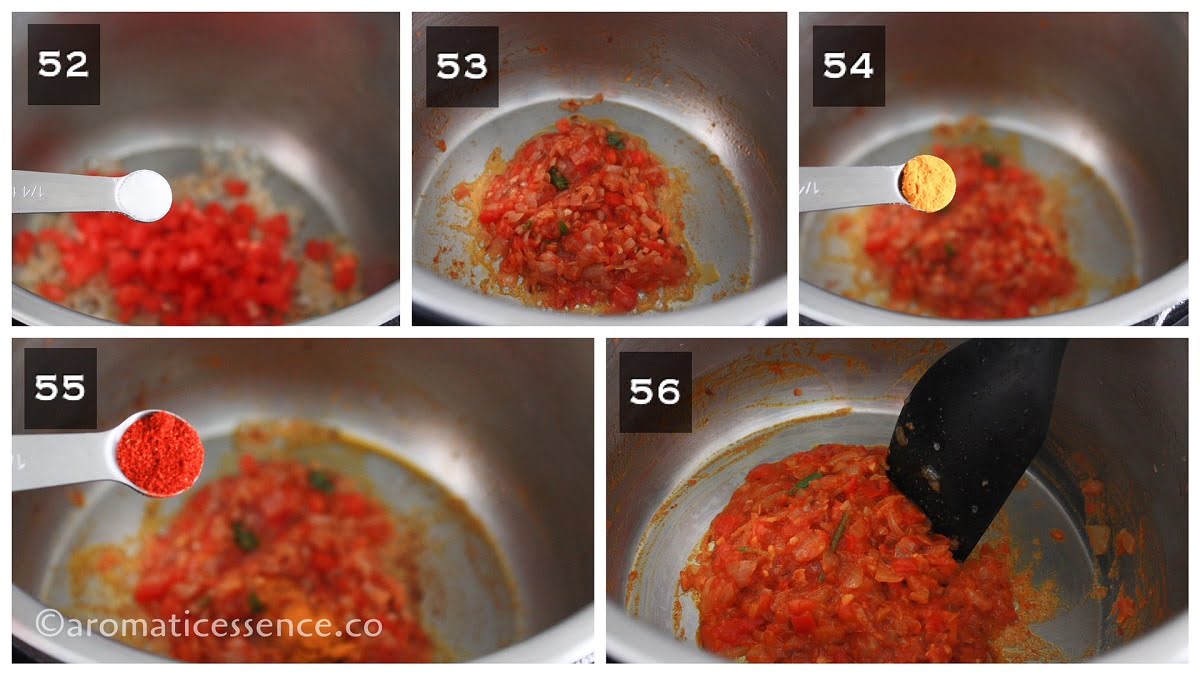
Add 1/2 cup chopped tomatoes and 1/4 teaspoon salt, sauté until it turns mushy. ( Photos 51 to 53)
Add 1/4 teaspoon turmeric and 1/2 teaspoon red chilli powder, sauté for another 30 seconds. ( Photos 54 to 56)
Step 2: Add dal, water, and pressure cook
Add the drained yellow lentils, mix well with the onion-tomato masala. Add 1 & 1/2 cups of water and mix well. ( Photos 57 to 59)
Press ‘CANCEL’ to switch off the “SAUTE’ mode. Close the lid of the Instant Pot. Set the valve to ‘SEALING’.
Pressure cook on ‘HIGH’ for 5 minutes. It will take some time for the pressure to build up (about 10 minutes), after which the timer will begin. ( Photo 60)
For unsoaked toor dal, pressure cook on ‘HIGH’ for 8 to 10 minutes.

Step 3: Natural pressure release followed by adding the rest of the ingredients
Once the cooking cycle is complete, let the pot depressurize naturally. It took me about 19 minutes. You could let it depressurize for at least 10 minutes. ( Photo 61)
Once the silver pin drops, turn the knob to ‘VENTING’ and open the lid away from you. ( Photo 62)
Whisk the dal using a wired whisk or a spatula until it is smooth. You may leave it as it is if you prefer it that way. ( Photo 63)
Turn on the ‘SAUTE’ mode, add about 1/2 cup of water or as per desired consistency, mix well and cook for another 5 minutes, stirring occasionally. Check for seasonings and adjust accordingly. ( Photos 64 to 65)
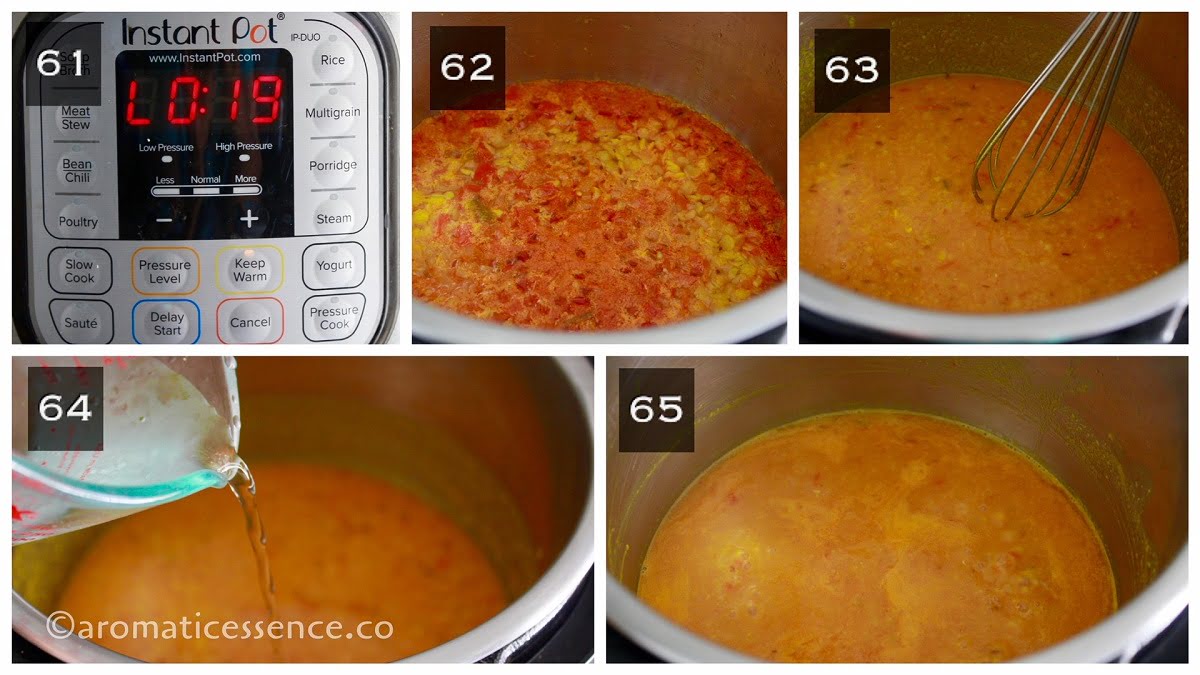
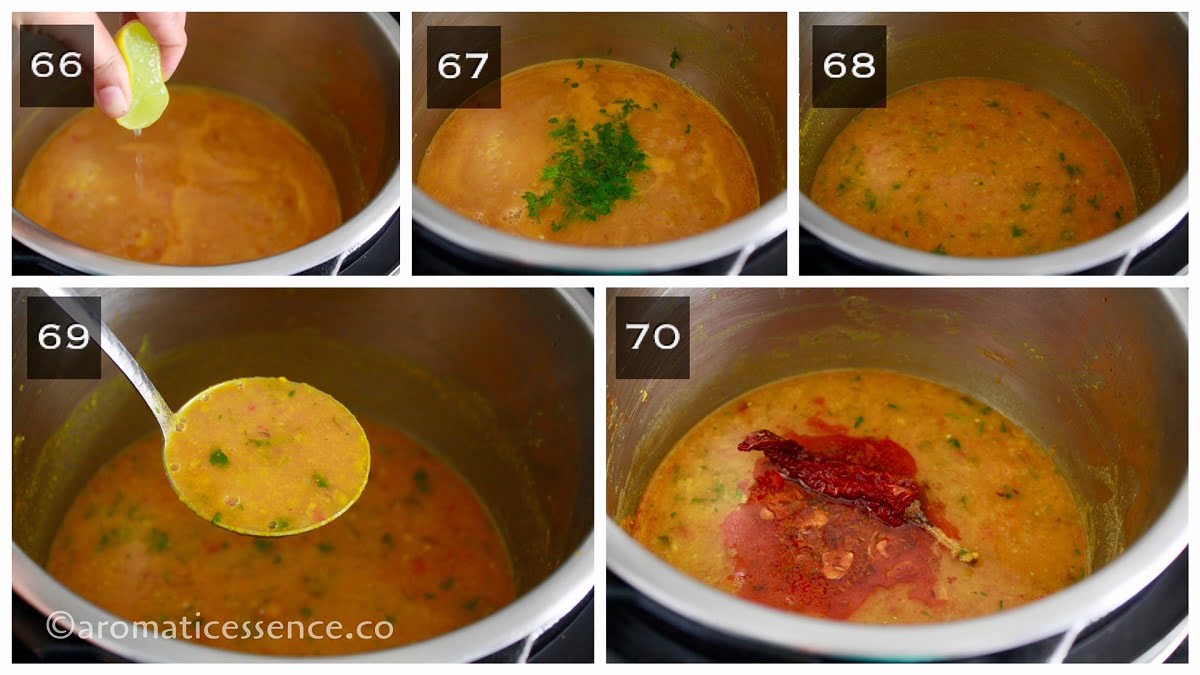
Switch off the IP. Squeeze lemon juice and finely chopped coriander leaves, mix well. ( Photos 66 to 69)
Pour the second tempering over the dal. Mix well and serve hot. ( Photo70)
Serving suggestions
Pair this toor dal with;
- Plain steamed rice, pulao, or jeera rice.
- Sabzi like bhindi masala , bharli vangi , or aloo methi .
- Phulka, roti, puri, paratha, or any other type of flatbread.
Storage suggestions
Plain dal (without 1st and 2nd tempering): You can store the plain pressure cooked dal (step 2) in an air-tight container in the fridge for up to 2 to 3 days. You can also portion the cooked dal in freezer-safe bags, and freeze it for up to 2 months. Thaw overnight in the fridge. Follow the recipe from step 3.
Leftovers: Dal is best enjoyed the day it is made. However, if you have leftovers, you can refrigerate in an airtight container for up to 2 to 3 days. Make sure that you refrigerate leftover dal within two hours of its preparation.
Freeze: You can also freeze dal (skip the second tempering) in freezer-safe bags or containers for up to 2 months, though 1 month would be best for optimal flavor.
Thaw: Let it thaw overnight in the fridge. Transfer to a pot, reheat on the stovetop, stirring occasionally until heated through. Add a splash of water if needed to adjust the consistency. Add the tempering and enjoy!
Tips to make the best toor dal recipe
This recipe is one of the simplest recipes from Indian cuisine, and yet there are some tips I’d like to share with you.
- Ghee: Adds a ton of flavor and aroma to dal. Besides that, ghee is a much healthier cooking fat as compared to refined oils that are available these days. Please do not substitute this unless you follow a vegan diet.
- Consistency of dal: This depends on your preference and can be adjusted using more or less water. With the quantities mentioned in the recipe, you should end up with a semi-thick dal, which is how we prefer at home. It might look runny while it’s on the stovetop. But it will thicken after resting for 15-20 minutes.
- Heat: Since I have used the spicy variety of green chilies and hot chili powder, this dal is a bit spicy. On a scale of 1 to 5, it would be about 3 in terms of spiciness. You can skip the green chilies and the chili powder (or decrease the quantity) to make it less spicy.
Variations
The recipe that I have shared is a very basic dal recipe but it is delicious nonetheless. I do not like to add a lot of spices to this dal when making it for a regular meal. However, there are umpteen versions as each person has their own style of making dal. Here are some optional add-ins and alternatives.
- Garam masala: You can add whole spices such as cloves, cinnamon, and bay leaves in the first tempering and/or add about 1/4 teaspoon of garam masala along with the other spices.
- More spices and herbs: You can also add 1 teaspoon of coriander powder, 1/2 teaspoon of amchur powder (skip the lemon juice if adding this) along with other spices. Even 1 teaspoon of crushed kasoori methi can be added towards the end.
- Curry leaves: You can also add curry leaves to the tempering.
- Mustard seeds: You can add about 1/2 teaspoon of mustard seeds along with cumin seeds.
- Sweet and tangy dal: You can add little jaggery and tamarind extract or amchur (dry mango powder) to add some sweetness and tang respectively to the dal.
- No tomatoes: The recipe works perfectly fine without tomatoes. Skip it if you wish to.
- Green leafy veggies: You can include greens like spinach, fenugreek, moringa, kale, etc in the dal. Add them after sautéing the onion, tomato, and spices, and cook until they wilt.

What is oily toor dal?
Oily toor dal is nothing but regular toor dal coated with edible oil to extend its shelf life. It is ideal to buy this dal if you stock up your pantry for months. Otherwise, you can opt for the regular dal which is what I always do.
Do you need to soak toor dal?
While you can get away by not soaking toor dal, I highly suggest you do. At least 30 minutes is ideal. Even it is for 15 minutes, it should be fine. You will need about 10-15 minutes to prep the onions, tomatoes, ginger, and garlic anyway. You can always soak the dal during this prep time.
Soaking lentils not only helps in reducing digestive problems but also reduces the cooking time. Needless to say, it does not make a huge difference in cooking time if you use a pressure cooker (stovetop or electric), but if you ask me I will still recommend soaking them.
Is toor dal and urad dal the same?
The two are not the same. Toor dal are pigeon peas or yellow lentils and urad dal is black lentils or black gram. Split and skinned urad dal, split with the skin (chilkewali urad dal or urad dal chilka), and whole urad dal are commercially available.
You may also enjoy these dal recipes
Dal palak
Instant pot brown lentil curry
You can also follow me on Facebook , Pinterest, Instagram & Twitter

Toor Dal Recipe | Arhar Dal {Stovetop + Instant Pot}
Equipment
- Instant Pot DUO60 6 Qt 7-in-1
Ingredients1x2x3x
To cook the dal
- 1/2 cup toor dal 100 g
- 1 & 1/2 cups water
- 1/2 teaspoon salt
- 1/4 teaspoon turmeric
- 1/2 teaspoon oil
1st tempering
- 1 tablespoon ghee
- 1/2 teaspoon cumin seeds
- 1/2 tablespoon minced ginger
- 1 tablespoon minced garlic
- 2 green chilies slit lengthwise or chopped finely
- 1/2 cup finely diced onion
- 1/2 cup chopped tomatoes
- 1/4 teaspoon salt or to taste
- 1/4 teaspoon ground turmeric
- 1/2 teaspoon red chili powder or cayenne pepper, skip or adjust as per desired heat
- 1/2 cup hot water
- 2 tablespoons finely chopped coriander leaves
- 1/2 tablespoon lemon juice or as needed
2nd tempering (optional)
- 1 tablespoon ghee
- 1/2 tablespoon oil
- 1/2 teaspoon cumin seeds
- 2 garlic cloves sliced thinly
- 1 dried red chili
- 1/8 teaspoon hing
- 1/4 teaspoon Kashmiri red chili powder
Instructions
Stovetop Instructions
- Rinse the toor dal well under running water until the water runs clear, then soak in about 2 cups of water for about 30 minutes.
- Transfer the drained dal to a pressure cooker. Add water, salt, turmeric, and oil.
- Pressure cook the dal, for 3 whistles on high heat, then lower the heat and simmer for another 5minutes. Switch off the heat and set the cooker aside.
- Once the cooker depressurizes, open the lid and whisk the dal using a wired whisk or a spatula until it is smooth. You may leave it as it is if you prefer it that way.
- Heat ghee in a heavy-bottomed kadai or pot.
- Once hot enough, Add cumin seeds. Once the cumin seeds crackle, add minced ginger, garlic, and 2 slit green chilies. Saute until ginger, garlic turn aromatic.
- Add finely chopped onions, sauté until it turns golden brown.
- Next, add chopped tomatoes and salt, sauté until it turns mushy.
- Add turmeric and red chilli powder, sauté for another 30 seconds.
- Next, add the cooked dal to the prepared tempering and give everything a good mix.
- Add about 1/2 cup of water or as per desired consistency (I rinsed the cooker with 1/2 cup water), bring to a boil. Check for seasonings and adjust accordingly.
- Reduce the heat to low, cover the kadai and simmer for another 5 minutes.
- Open the lid and give the dal a good mix. Switch off the heat. Squeeze lemon juice and finely chopped coriander leaves, mix well.
- For the second tempering: Heat ghee and oil in a tadka pan or a small pan over medium-low heat. Add cumin seeds, allow it to crackle.
- Next, add sliced garlic, and 1 dried red chili.
- Once the garlic starts to turn golden and the red chilies change color, add hing. Switch off the heat and add Kashmiri red chili powder.
- Mix well and pour it over the dal immediately. Mix it well and serve hot with rice or any other flatbread.
Instant Pot Instructions
- Follow the same process above for rinsing and soaking the yellow lentils. If you skip soaking, refer to the pressure cooking time mentioned below.
- Press the ‘SAUTE’ button, and set it to ‘NORMAL’. Once it displays, ‘HOT’, add ghee.
- Add cumin seeds. Once the cumin seeds crackle, minced ginger, minced garlic, and 2 slit green chilies. Saute until ginger, garlic turn aromatic.
- Add chopped onions, saute until golden brown.
- Add chopped tomatoes and salt, sauté until it turns mushy and you see oil oozing from the sides of the pot.
- Add turmeric and red chilli powder, sauté for another 30 seconds.
- Add the drained yellow lentils, mix well with the onion-tomato masala Add 1 & 1/2 cups of water. Mix well.
- Press ‘CANCEL’ to switch off the “SAUTE’ mode. Close the lid of the Instant Pot. Set the valve to ‘SEALING’.
- Pressure cook on high for 5 minutes. It will take some time for the pressure to build up (about minutes), after which the timer will begin.
- For unsoaked toor dal, pressure cook on ‘HIGH’ for 8 to 10 minutes.
- Step 3: Natural pressure release followed by adding the rest of the ingredients
- Once the cooking cycle is complete, let the pot depressurize naturally. It took me about 19 minutes. You could let it depressurize for at least 10 minutes.
- Once the silver pin drops, turn the knob to ‘VENTING’ and open the lid away from you.
- Whisk the dal using a wired whisk or a spatula until it is smooth. You may leave it as it is if you prefer it that way.
- Turn on the ‘SAUTE’ mode, add about 1/2 cup of water or as per desired consistency, mix well and cook for another 5 minutes, stirring occasionally. Check for seasonings and adjust accordingly.
- Switch off the IP. Squeeze lemon juice and finely chopped coriander leaves, mix well.
- Pour the second tempering over the dal. Mix well and serve hot.
