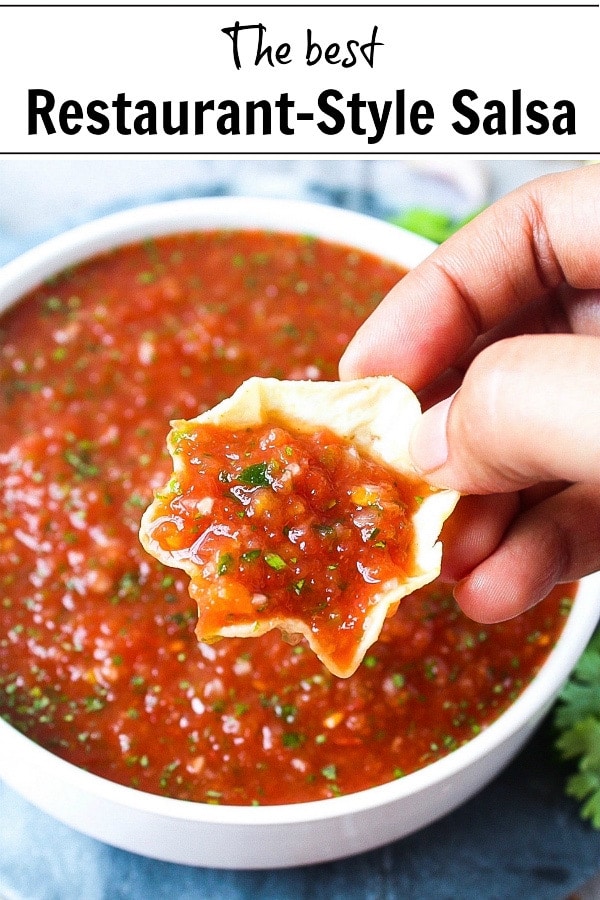
This restaurant-style, homemade salsa recipe is easy, quick, and delicious! You need just 10 minutes to prepare this delicious dip to go along with your favorite chips or use it in any recipe that calls for salsa!
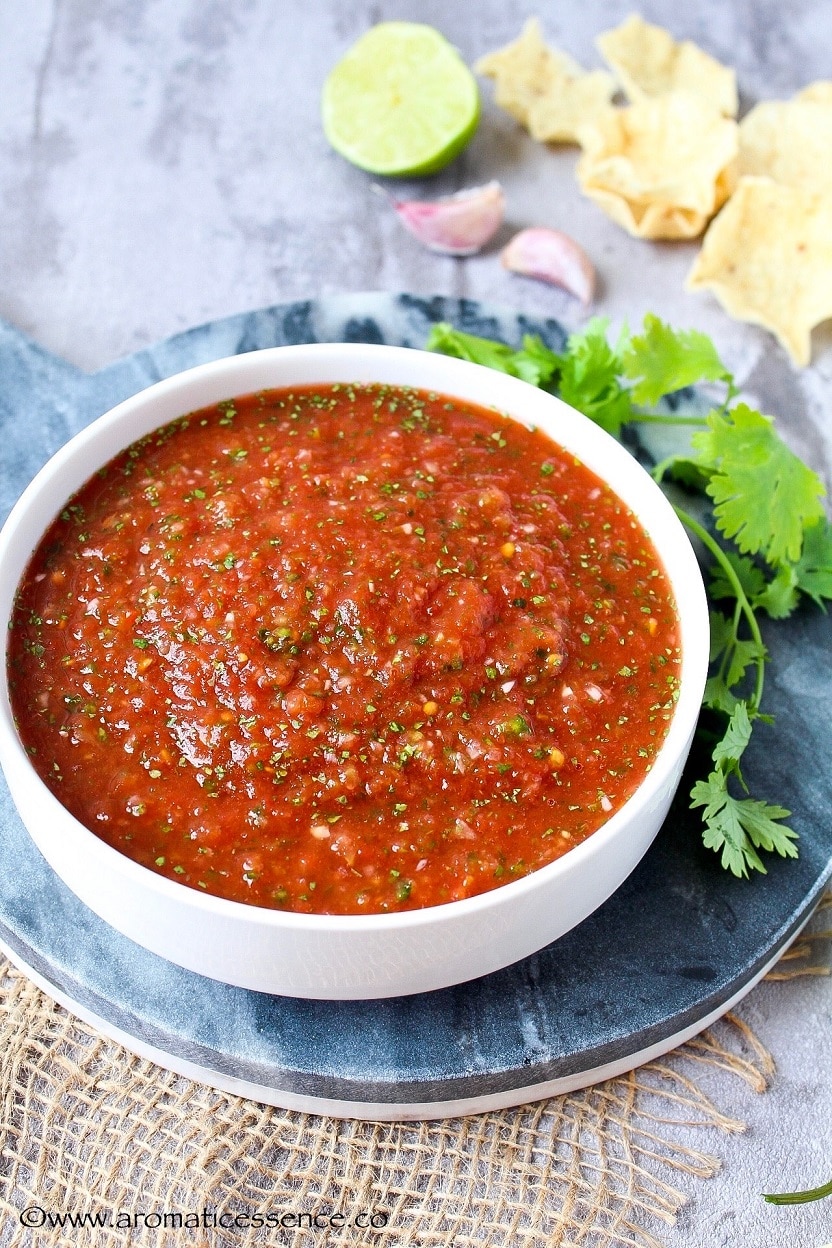
Since I posted Instant Pot refried beans last week, I thought of sharing some other quintessential Mexican side dishes with you guys! These sides are pretty quick to whip up and compliment all of your Mexican and Tex-Mex meals really well.
One of my favorite thing about eating out at Mexican restaurants are the complimentary chips and salsa. That basket piled with warm tortilla chips and salsa is truly so irresistible and addictive. Club that with some margs and I’m in appetizer heaven! Haha 😀
I came across the Pioneer Woman restaurant-style salsa recipe online and thought of giving it a go. I thought it was actually better than any of the salsas I’ve had at the restaurants.
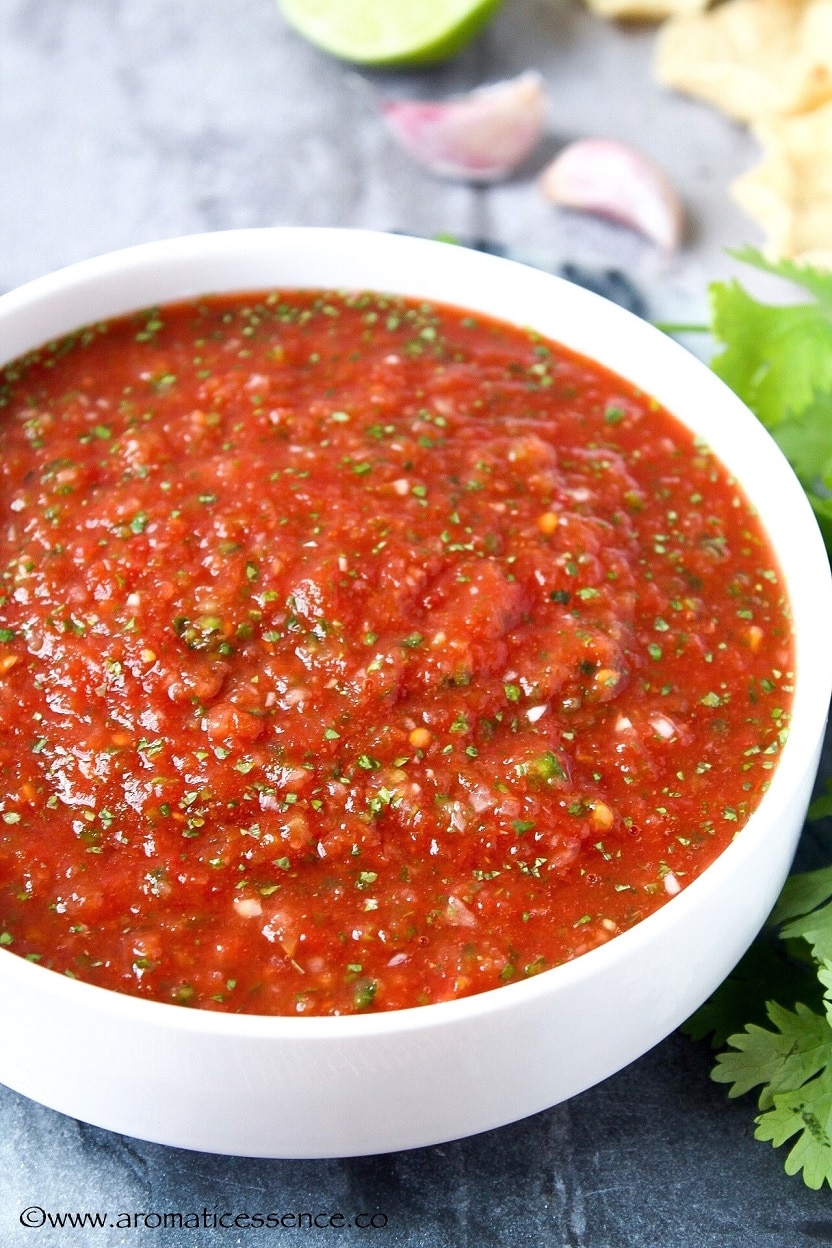
It is packed with a tongue-tickling, zesty flavor! The ingredients meld and mingle, complementing each other perfectly in this recipe. It is seriously the best salsa I’ve ever made!
- Ingredients needed
- Reasons you will like this salsa
- How to make homemade salsa recipe – Step by step instructions
- Ways to use this salsa
- Storage and freezing instructions
- Customize this easy homemade salsa recipe
- Quick FAQs
- You may also enjoy these easy salsa recipes
- Homemade Salsa Recipe {Restaurant Style}
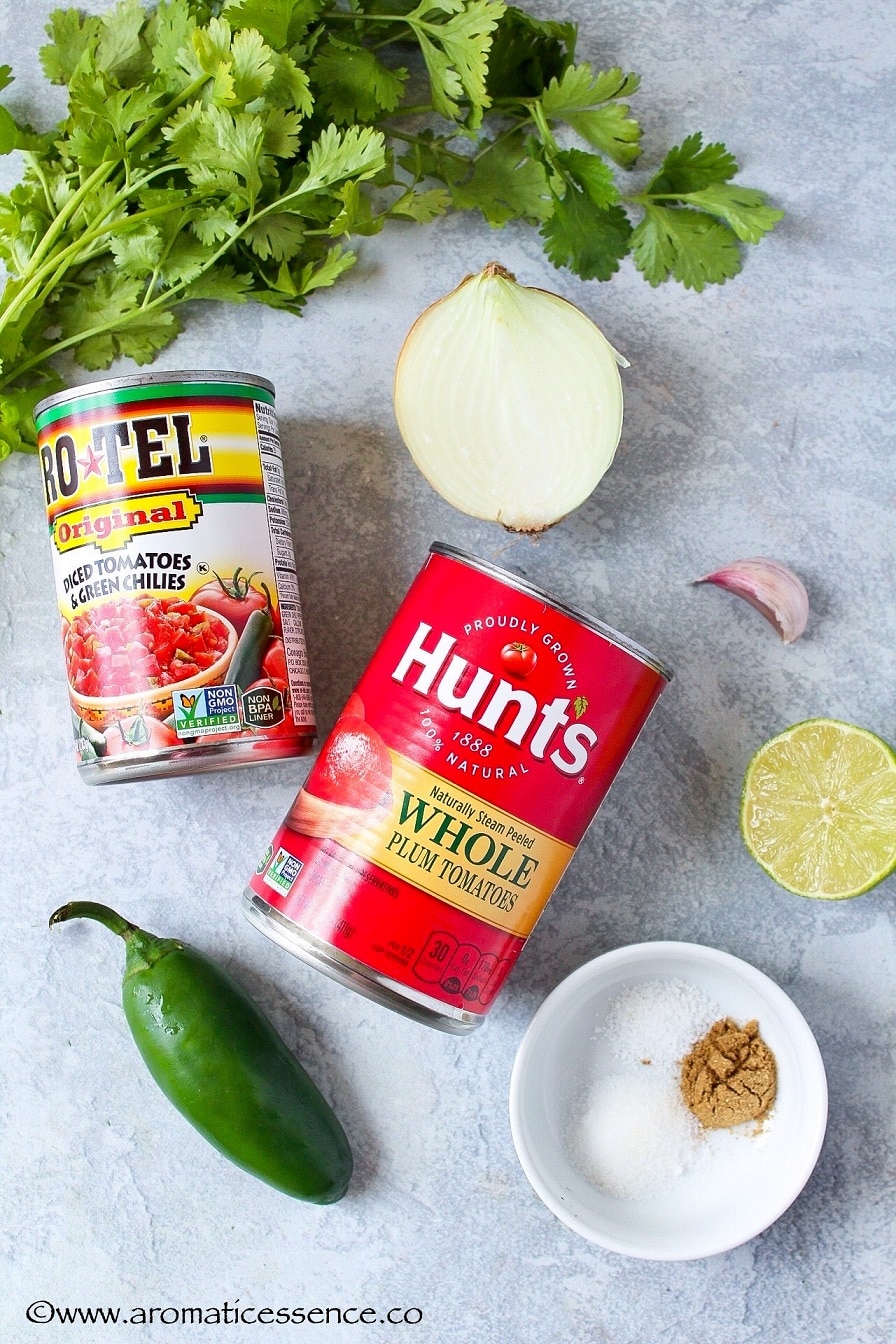
Ingredients needed
- Tomatoes: This recipe for homemade salsa calls for canned whole peeled plum tomatoes and a can of Rotel. You can substitute the whole plum tomatoes with other canned tomato products like diced tomatoes, fire-roasted tomatoes, or crushed tomatoes. You can also use fresh tomatoes. More on that in the FAQs .
- Roughly chopped onion: I prefer to use yellow onions for this recipe. I suggest you stick to this or consider using Vidalia or shallots. White onions have a sharper, more pungent flavor, whereas red onions can be too astringent and may end up overpowering the flavor of tomatoes in the salsa. In small quantities, they shouldn’t affect as much. You can find more tips on onions in ‘ customize this salsa ’ section below.
- Garlic: I’ve added one clove, you can add as much as you like. If you have time to spare, you can probably roast the garlic and add that instead.
- Fresh chile peppers: I’ve used one jalapeño pepper.
- Fresh cilantro/coriander leaves along with tender stems
- Salsa seasoning mix, which consists of ground cumin, sugar, and salt.
- Fresh lime juice: You could also use lemon juice.
Reasons you will like this salsa
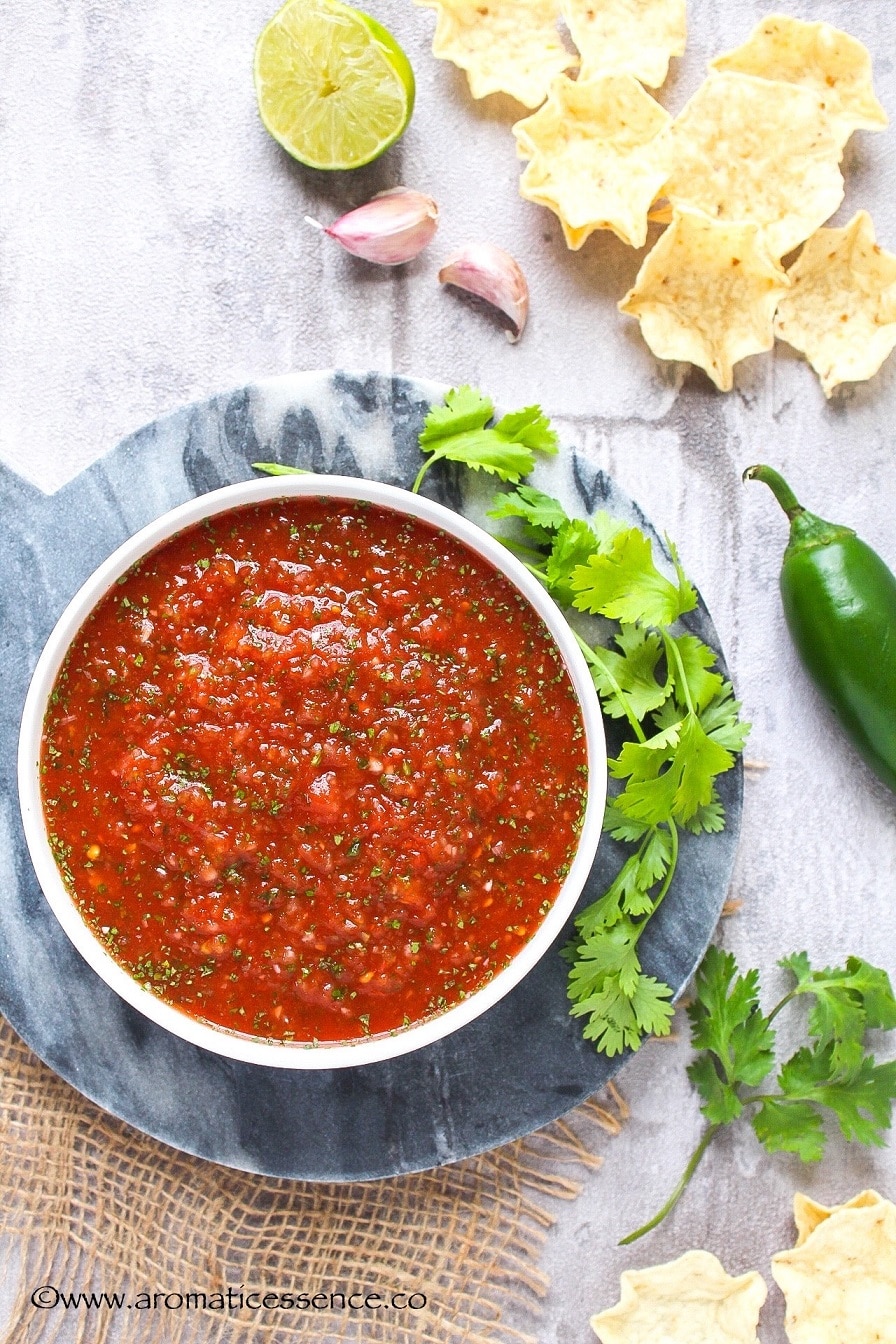
- Restaurant-style, in fact, it is much better
- A million times better than the store-bought jarred salsa brands
- Quick and easy recipe, the ingredients are dumped in the food processor, a few pulses and its ready
- Vegan & gluten-free
How to make homemade salsa recipe – Step by step instructions
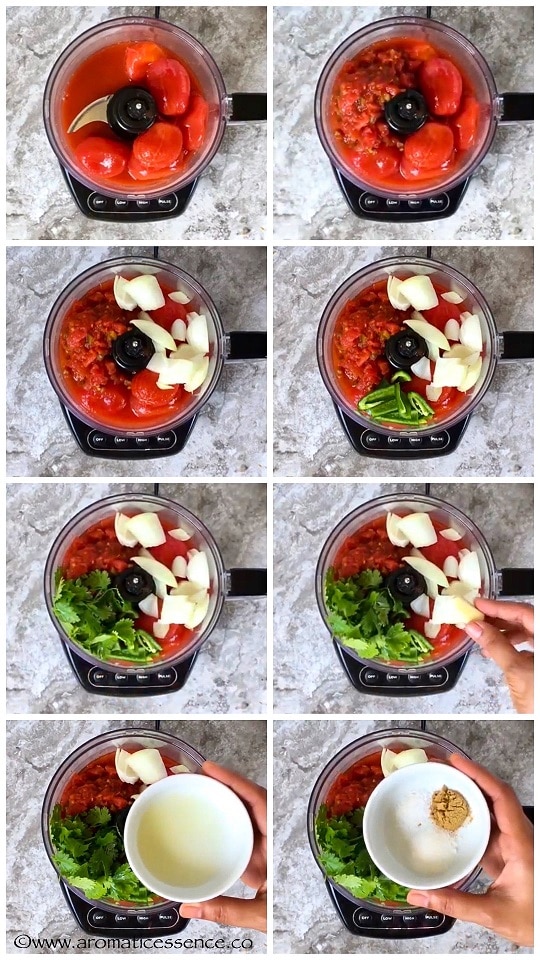
Step 1: Add all the ingredients in the bowl of a food processor
Add 1-(14.5 oz) can of whole peeled plum tomatoes, 1-(10 oz) can of Rotel with green chilies, 1/4 cup roughly diced onion, 1 jalapeño, seeded and diced, 1 garlic clove, 1/4 to 1/2 cup of cilantro leaves along with tender stems (wash the cilantro well and pat dry), 1/2 tablespoon lime or lemon juice, 1/4 teaspoon ground cumin, 1/4 of teaspoon kosher salt, and 1/4 teaspoon sugar into a blender or food processor.
Step 2: Process
Pulse in short bursts until the salsa has reached your desired consistency.
Taste-test! Check for seasoning using a tortilla chip, add the remaining 1/2 tablespoon or more of lime juice if needed. Add more salt or sugar to balance the flavors, if required.
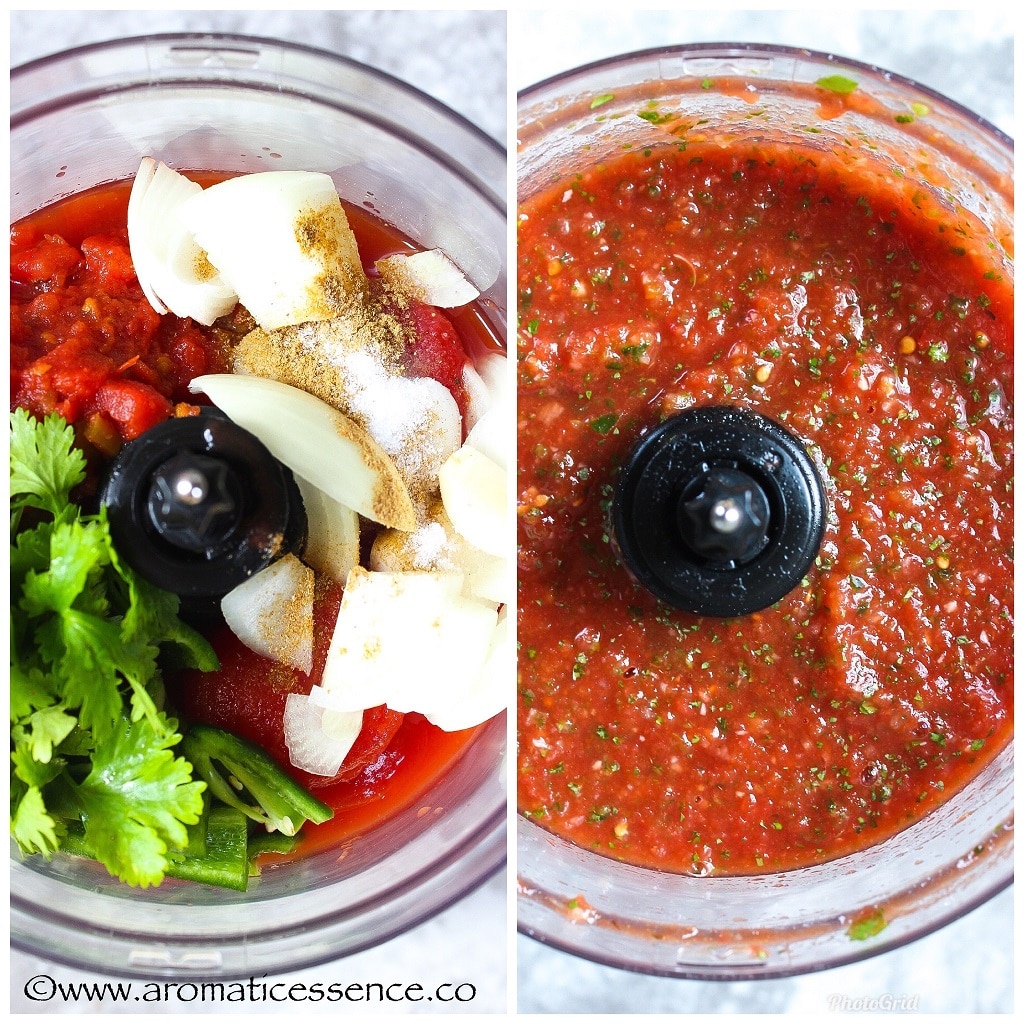
Transfer the salsa to a bowl, cover and refrigerate for a minimum of 1 hour before serving, so that the flavors have a chance to meld and develop. Salsa tastes better as it sits, it is even better on the second day, only if it lasts that long 😀
Ways to use this salsa
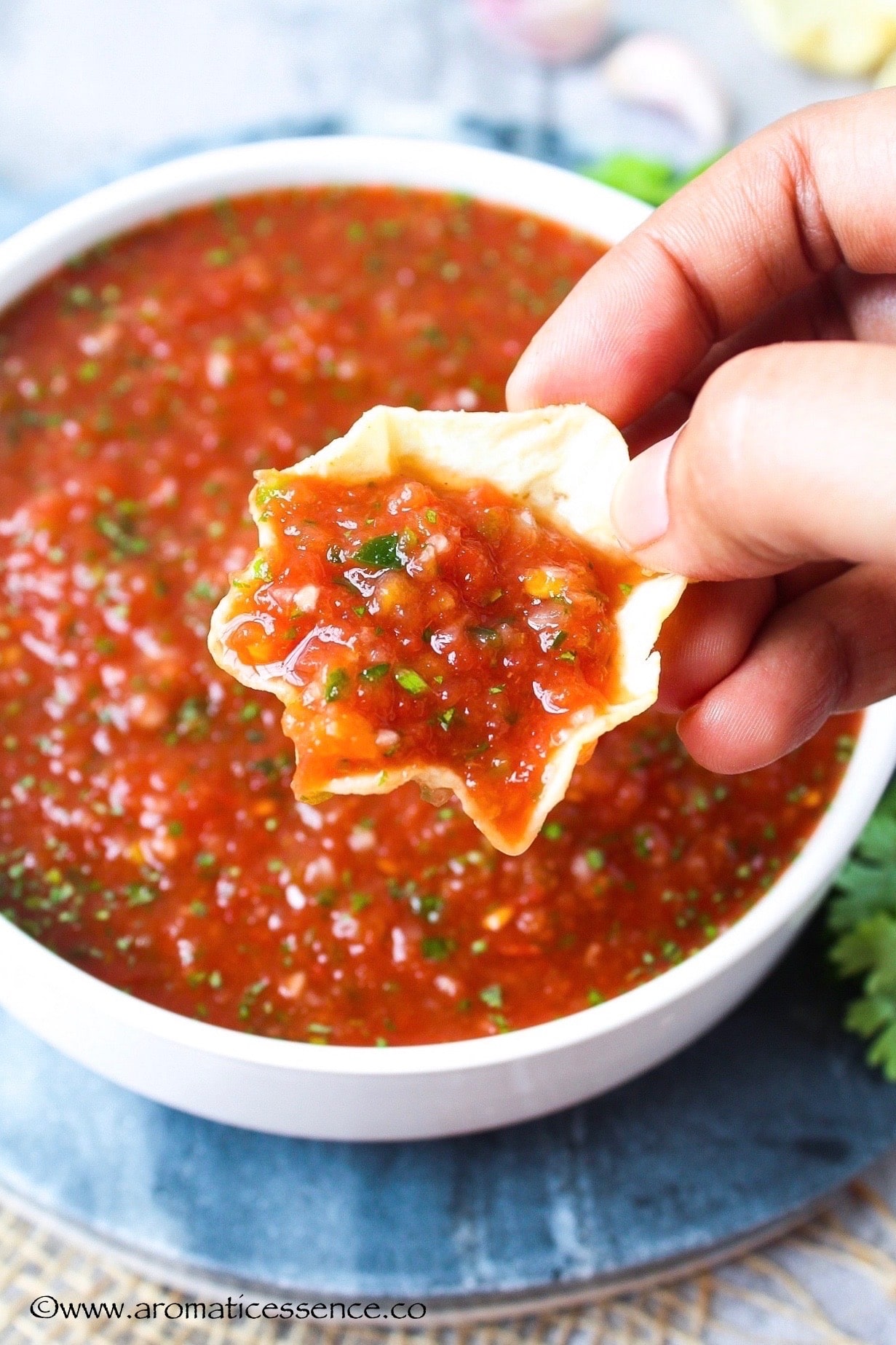
This salsa is not only great along with your favorite Mexican meals like fajitas, quesadillas, tacos, etc but it is also fantastic in recipes that call for salsa.
I love topping baked potatoes or scrambled eggs with salsa. Sometimes, I use it instead of tomato sauce to make Mexican rice. I also love using this salsa to make Instant Pot salsa chicken (so great for meal-prep) and burrito bowls.
It is also awesome as a light salad dressing!
Storage and freezing instructions
This fresh homemade salsa will keep well in an airtight container in the refrigerator for up to a week.
I personally don’t like to freeze salsa, as I feel it is best consumed within a week. And you hardly need 5-10 minutes to put this salsa together.
You can freeze it if you want to though! Transfer the salsa into freezer-safe containers or resealable freezer bags in the required portion sizes. Label them and stack them flat, freeze up to 2 months.
To thaw the salsa, defrost it in the refrigerator overnight. Transfer to a bowl, mix it up with a spoon, taste and adjust with fresh cilantro, and other seasonings if required.
Customize this easy homemade salsa recipe
There is no hard and fast rule when it comes to making salsa. This easy homemade salsa recipe is so good, you may not need to modify much. But there is always room to experiment with recipes like these!
Heat: This salsa recipe is medium-spicy because it uses a can of diced tomatoes and chillies (Rotel) along with jalapeño. I remove the seeds of the pepper and set them aside. If needed it’s easy to increase the heat by adding some of the seeds to the salsa.
The jalapeño doesn’t add as much heat as much as Rotel does. You can also experiment with other peppers, jalapeño or serrano, habanero, or a ghost pepper if you really like to switch up the heat.
Roasting the pepper is another alternative to add some smoky depth of flavor to your salsa.
You can also experiment with dried Mexican chile peppers such as Anaheim, arbol, ancho, guajillo, cascabel, pasilla, Morita, etc. Roast the peppers on a skillet for 2-3 minutes. Do not roast them too much, as they will lend a bitter taste to the final dish. Using gloves, discard the stems, seeds, and membranes. Rehydrate the peppers in boiling water until soft, and use them in the salsa.
You can also use bell peppers in this recipe, though I prefer to leave them out.
The flavor of the salsa will vary depending on the kind of pepper you use, as each of them has its own unique flavor profile.
Smooth or chunky consistency: The consistency of salsa comes down to personal preference. We like ours smooth just like it’s served at the Mexican restaurants. You can tailor it to make it chunky or smooth.
If you want a really thick salsa, drain the can of plum tomatoes and Rotel. Also, remember to pulse the ingredients in short bursts.
You can hold back on adding the Rotel in the processor. Process all the ingredients, then drain and add it to the mixed ingredients. Doing so will also give you a chunkier salsa.
No Cilantro: I love my homemade salsa with cilantro! However, I know a lot of folks who have a thing against cilantro! You can either hate or love this herb. If you can’t stand it, simply omit it. This salsa won’t quite taste the same, but it will still be delicious. You can substitute cilantro with other fresh herbs like parsley, basil, or mint.
No-onion or garlic: Dislike either one or both? Then simply omit it.
If the pungent flavor of the onion puts you off, I have 3 suggestions.
- Use sweet onions or shallots which are a bit mild.
- Place the diced onion in cold water for 10 minutes, drain, and use it in the recipe. This trick helps cut back on the pungency of the onions.
- Avoid adding the onions in the food processor. Dice them finely and add them to the salsa in the end.
No lime juice: I like the little zing the lime juice gives, it brightens the flavor of the salsa. If you are unsure about using it, you can skip it. I do suggest, starting off with a little lime juice and then increasing gradually if required.
Why do I prefer to use canned tomatoes for this recipe?
Why is my salsa bitter?
There could be a number of reasons why your salsa could have a bitter bite. It could be the kind of onions that you used, or probably the garlic was old, or it could be the kind of peppers that you used in the salsa. Add some acid, salt, or sugar to balance the bitterness.
Can I make this salsa with fresh tomatoes?
If you have an abundance of garden tomatoes, you can most certainly use that instead to make this red salsa from scratch. I do prefer to make Pico de Gallo, which is basically a fresh, chopped tomato salsa, that does not require any blender or food processor.
Unfortunately, you cannot swap the fresh tomatoes for the canned ones directly in this recipe, especially if you use a blender, because the salsa will be;
- Watery
- Foamy and bubbly
- Have a dull red-pink color
Whether you opt to make the salsa with fresh tomatoes in a blender or food processor, I highly suggest following one of the procedures of doing a little prep work for the tomatoes.
First things first, you will need at least 6-8 fresh, ripe, juicy, and plump tomatoes. Roma tomatoes are great for this recipe.
Blanching
- Core the tomatoes and score an ‘x’ on the bottom of the tomatoes. Place them in a pot along with half an onion, fresh peppers, and garlic and enough water to cover the ingredients.
- Bring to a boil and cook until you see the tomato skins separating from the flesh.
- Transfer the ingredients to a bowl with a slotted spoon reserving the water in the pot.
- Once cool enough to handle, peel the skins off the tomatoes, cut into halves, discard the seeds and transfer the tomatoes to the blender or processor along with the remaining ingredients.
- Blend in short pulses to your desired consistency adding the reserved water if required.
- Add about a tablespoon oil in a skillet, transfer the salsa, season with salt and other seasonings like ground cumin, sugar, etc
- Cook for about 10 minutes or until it is reduced and thickens slightly. Stir in some chopped cilantro if you like. Serve warm or chilled.
This is pretty much a traditional recipe for salsa de Mesa or table salsa made with fresh tomatoes.
Roasting
- You can roast the tomatoes on a skillet or directly on the gas flame with the help of tongs or under the broiler or grill it.
- Stovetop: Core the tomatoes and slice lengthwise. Heat oil in a skillet, place tomatoes cut-side down, along with roughly diced onion wedges, unpeeled garlic, and peppers on a cast-iron skillet. Roast for about 5 minutes or until lightly browned and softened. Flip and cook the other side for 2-3 minutes.
- Oven: Place tomatoes cut-side up on a rimmed baking tray, along with the onions, unpeeled garlic, and peppers. Drizzle a little oil all over the veggies. Broil for about 7-10 minutes or until the tomatoes begin to release their juices and the skins begin to char.
- Peel the garlic, discard the stems of the pepper and transfer to a blender or processor, along with the rest of the ingredients. Pulse to your required consistency.
- Follow the same procedure of frying the salsa as mentioned above.
Note: I like to add cilantro in the end in order to preserve the freshness of the herb. You can certainly blend all the seasonings, lime juice, and cilantro along with the rest of the ingredients and then simply fry the salsa.
No-cook salsa with fresh tomatoes
- Dice the tomatoes into halves lengthwise, scoop out the seeds, place them in a colander or a fine-mesh strainer, sprinkle some salt, and mix well.
- The salt will draw out the excess moisture, let the tomatoes drain for at least 30 minutes, and then use them in this recipe. You can then use them in a blender or processor to make the salsa, but always remember to pulse in short bursts instead of making a purée.
- Or go the traditional route, and use a molcajete to grind the ingredients. Salsa made in a molcajete is undoubtedly the best.
Out of all these alternatives, I prefer salsa made with roasted tomatoes. What about you?
You may also enjoythese easy salsa recipes
- Corn salsa
- Mango salsa
- Roasted tomatillo salsa verde
You can also follow me on Facebook , Pinterest, Instagram & Twitter
Homemade Salsa Recipe {Restaurant Style}
Ingredients1x2x3x
- 1- (14.5) oz can of whole peeled plum tomatoes, undrained
- 1- (10) oz can of Rotel with green chilies
- 1/4 cup roughly diced yellow onion
- 1 jalapeño, seeded and diced
- 1 garlic clove
- 1/4 to 1/2 cup cilantro leaves along with tender stems, you may skip or add more or less as required
- 1/4 teaspoon ground cumin
- 1/2 to 1 tablespoon lime juice, more if required
- 1/4 teaspoon kosher salt
- 1/4 teaspoon sugar
Instructions
- Add all the ingredients into a blender or food processor.
- Pulse in short bursts until the salsa has reached your desired consistency.
- Taste-test! Check for seasoning using a tortilla chip, add the remaining 1/2 tablespoon or more of lime juice if needed. Add more salt or sugar to balance the flavors, if required.
- Transfer the salsa to a bowl, cover, and refrigerate for a minimum of 1 hour before serving.
Notes
- You may drain the canned tomatoes for a thicker salsa.
- Adjust seasoning as per desired taste.
- Please refer to the ‘ customize this salsa ’ section in the post for more ideas.
- To use fresh tomatoes in this recipe, please have a look at the methods listed in FAQs in the post.
- Recipe adapted from the Pioneer Woman

Homemade Salsa Recipe {Restaurant Style}
Ingredients
- 1- (14.5) oz can of whole peeled plum tomatoes, undrained
- 1- (10) oz can of Rotel with green chilies
- 1/4 cup roughly diced yellow onion
- 1 jalapeño, seeded and diced
- 1 garlic clove
- 1/4 to 1/2 cup cilantro leaves along with tender stems, you may skip or add more or less as required
- 1/4 teaspoon ground cumin
- 1/2 to 1 tablespoon lime juice, more if required
- 1/4 teaspoon kosher salt
- 1/4 teaspoon sugar
Instructions
- Add all the ingredients into a blender or food processor.
- Pulse in short bursts until the salsa has reached your desired consistency.
- Taste-test! Check for seasoning using a tortilla chip, add the remaining 1/2 tablespoon or more of lime juice if needed. Add more salt or sugar to balance the flavors, if required.
- Transfer the salsa to a bowl, cover, and refrigerate for a minimum of 1 hour before serving.
Notes
- You may drain the canned tomatoes for a thicker salsa.
- Adjust seasoning as per desired taste.
- Please refer to the ‘ customize this salsa ’ section in the post for more ideas.
- To use fresh tomatoes in this recipe, please have a look at the methods listed in FAQs in the post.
- Recipe adapted from the Pioneer Woman
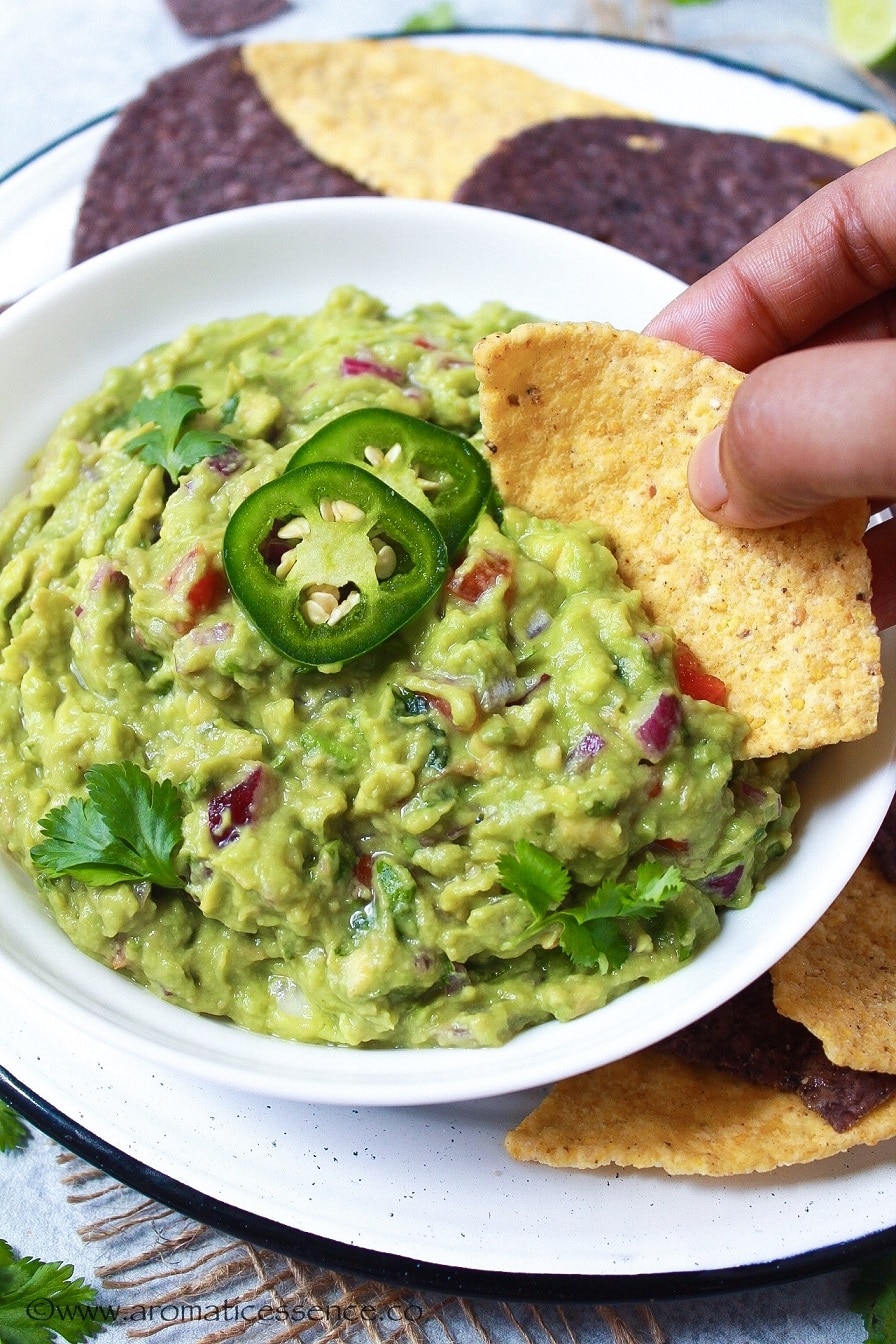
This Mexican guacamole is creamy, delicious, and refreshing. It is made with clean ingredients, and just takes a few minutes to make a batch of fresh guacamole from scratch! Great as a healthy dip with some baked chips or the perfect accompaniment to go along with your favorite Mexican or Tex-Mex meals. Vegan & gluten-free!

A few years ago, avocados were not really a thing in India. I hadn’t even tasted an avocado until I relocated to the US. Besides being popularly used in guacamole, it is used in so many other things in the US.
Now that we moved back to India, I’m so glad to know that things have changed here. We get most of these exotic fruits and vegetables made possible through e-commerce. In fact, they are even available in the local vegetable and fruit markets. This means we can continue to incorporate this exotic fruit (yes! avocado is a fruit) and continue to make guacamole 😀 That is undoubtedly the one thing that I make the most with avocados besides using them in smoothies!
- Ingredients you will need
- What does guacamole taste like?
- Tips to make the best guacamole
- Substitutions in this recipe
- Variations
- Ways to use this Mexican dip
- You may also enjoy these easy dips
- How to make guacamole – Step by step instructions
- Quick FAQs
- How To Make Guacamole
Ingredients you will need
You will need the following ingredients to make this easy Mexican guacamole dip;
- Avocados
- Red onion
- Firm, ripe tomato
- Serrano or Jalapeño pepper
- Lime juice
- Cilantro leaves and tender stems
- Kosher salt
- Ground cumin, which is totally optional

What does guacamole taste like?
Ripe avocados have a very mild sweet taste and a creamy, buttery texture. It’s the other ingredients that you add along with the avocados that contribute to the flavor profile of the guacamole.
This one here is full of robust flavors and textures. It is refreshing with an added zing from the lime zest. My homemade version reminds me of the guacamole I had in the restaurant at one of the Mercados (markets) in Mexico City, it was so basic but oh so good!

Carne asada served with guacamole topped with queso fresco, at a restaurant in a Mexican market.
Tips to make the best guacamole
1. Ripe avocados
Avocados are the primary ingredient for guacamole, so how to select avocados for guacamole?
You have to make sure you start off with good quality, ripe avocados. There are so many varieties of avocado, but Hass avocados are the best for guacamole and that’s what I’ve used.
- Ripe Hass avocados will yield to gentle pressure when squeezed lightly with your palms. They should have a slight give and leave no indentations. Their skin color is a purplish-black and the texture of the skin is a little bumpy.
- Unripe Hass avocados are quite firm and will not yield to any pressure. Also, the skin color is green. These will take about 1-2 days to ripen.
- Overripe Hass avocados as quite soft and mushy and will leave indentations when pressed with your fingers. The skin color is almost black and the flesh might be brown in some spots.
This method of determining the ripeness of avocado, based on the color of its skin is not applicable to other varieties of avocado as they remain green even if they are under-ripe or overripe.
Another method of checking if the avocado is ripe is by removing the stem and examining the color of the flesh underneath.
- If it’s green, it is ripe and ready to be used.
- Brown? Then it is overripe.
- Difficult to pluck the stem? Then it is unripe.
If they aren’t ripe, store them in a brown paper bag, they will ripen faster, in a day or two.
If they are ripe, and you won’t be using them right away, refrigerate them as that will slow down any further ripening.
2. Texture
Skip the food processor or blender to make guacamole. You really don’t want avocado purée for this recipe. A good guacamole is supposed to have some texture.
You can make it chunky or smooth, however, you like it. A regular fork or potato masher is more than enough to help you achieve that.
Traditionally, guacamole is made in a molcajete. The onions, cilantro, peppers, and salt are pounded with a pestle to make a coarse paste. Then the avocado is added and mashed along with the paste to the desired consistency. Guac made this way is really the most flavorful. The entire chemistry changes when ingredients are crushed in a mortar and pestle as opposed to a blender or food processor.
You can replicate that to an extent by using the food processor or blender to finely chop the onions, cilantro, serrano pepper. But it’s still not going to be the same.
I personally prefer to use a bowl, a cutting board, and a knife because I do not have a molcajete or a large mortar and pestle.
3. De-seed the tomatoes
Avoid using the seeds or pulp of the tomatoes, as that will result in watery guacamole.
4. Fresh lime juice
Please try and avoid using bottled lime juice. Freshly squeezed lime juice is so much better in the guac. The acidity balances and cuts through that rich, buttery avocado goodness.
5. Avoid those guacamole seasoning mix packets
Seriously, those have no place in this guacamole recipe. The ingredients are so simple, you might as well give those packets a miss!
6. The right ratios
The perfect guacamole should have the right ratios of ingredients. Too much of onions and it will overpower the entire thing, too much of lime juice and it’s going to be extra tangy, an excess of cilantro will add too much of a herby note overpowering the delicate flavor of the avocado.

Substitutions in this recipe
I love using these ingredients to make guacamole. But I’m sure everyone has their own preference when it comes to some of the ingredients.
Cilantro: I love adding cilantro in salsa or guacamole or just about anything. I’m accustomed to the taste of cilantro because it is the most common herb used in Indian cuisine. If you can’t stand cilantro, you can definitely skip it altogether. Or consider using flat-leaf parsley, mint, or basil to add a herby note to the guac.
Or follow a tip I always suggest. Place diced onions in a bowl of cold water for 10-15 minutes, drain and use. The onions still have their crunch without all that pungency.
Tomatoes: You can leave out the tomatoes if you wish to. Or substitute it with canned petite diced tomatoes or a can of Rotel, just remember to drain the juices. Cherry tomatoes are great too!
Spicy: I used a serrano pepper to spice up this guacamole. You can use jalapeño, with or without seeds, totally up to you! If you don’t have fresh chile peppers, you could also use pickled jalapeños, mild, medium, or hot, depending on your desired spice levels. A dash of cayenne pepper will also add some kick to the guacamole.
Lime juice: Although the traditional recipe uses lime juice, you can swap it with lemon juice if you don’t have any limes.

Variations
I like to keep this dip really basic and simple because I think it’s the best that way!
However, I know sometimes we love to experiment, and that’s not a bad thing. Which is why I have some suggestions for you. Try either of them if you are in the mood to experiment 😀
Cheese: You can garnish the guac with some queso fresco or cotija cheese.
Creamy: Add about 1/4 cup each of either softened cream cheese or sour cream. You can also add both these creamy components for an extra creamy guac. Or keep it healthy by adding 1/4 cup of Greek yogurt instead of cream cheese or sour cream.
Salsa guacamole: Mash the avocados with a pinch of salt, lime juice. Then add about 1/2 cup of mild, medium or hot salsa. Mix it up and serve guacamole salsa!
If you are wondering which salsa to use, then opt for Pico de Gallo which is fresh chopped tomato salsa. Drain the extra liquid and add it to the mashed avocados to avoid watery guacamole. The restaurant type salsa that I shared last week is not suitable here.
Southwestern: Fold in some steamed or roasted corn and black beans along with the other ingredients.
Indian style guacamole: Add a pinch of spices like black salt + chaat masala or coriander + garam masala or curry powder, to taste. You can also throw in some freshly minced ginger root.
Mediterranean inspired: In addition to the onion and tomatoes, add a few tablespoons of diced bell pepper, cucumber, Kalamata olives, dried oregano instead of cumin, red wine vinegar instead of lime juice and crumbled feta cheese!
Tropical fruits: Add finely diced tropical fruits like mango or pineapple to the guacamole. It would add a nice sweet and tangy touch.
Garlic: You can add one or as much as you like of finely minced garlic clove. Despise raw garlic flavor? Then consider adding roasted mashed garlic cloves or 1/4 teaspoon of garlic powder.
Ways to use this Mexican dip
Give me a bowl of guac along with some baked tortilla chips and I’m a happy girl! I enjoy it sans the chips too, devouring every spoonful 😀
If I’m in the mood for healthy snacking, I serve guacamole with crudités instead.
Some of the other ways I love to use guacamole are;
- With nachos
- On tostadas
- In a 7 layer dip
- As a topping for tacos or burritos
- Serve along with fajitas, flautas or quesadillas
- As a spread for toast or sandwich (I swap the mayo for guac in the vegetable mayonnaise sandwiches and the cream cheese for guacamole in these cream cheese sandwich bites )
- Grilled chicken or grilled salmon
- Bruschetta
- Egg salad or deviled eggs
- Tuna salad
You may also enjoy these easy dips
- Greek tzatziki
- Baba ganoush
- Salsa verde
- Restaurant-style salsa
How to make guacamole – Step by step instructions
Step 1: Mash the avocados
Cut 3 avocados lengthwise, around the pit. Remove the pit, and scoop the avocado into a mixing bowl.
Mash with the back of a fork, until is smooth or chunky, depending on the desired consistency.

Step 2: Add the rest of the ingredients and mix
Add 1/4 cup finely chopped red onions, 1 Roma tomato, deseeded, 1/4 cup finely chopped cilantro, 1/2 teaspoon kosher salt, 1/4 teaspoon cumin (optional), 2 tablespoons freshly squeezed lime juice. Mix it well. Taste-test and adjust with more salt, lime juice or cilantro.

Step 3: Dig in

Notes
- Add salt and lime juice, to taste. Start with half of the amount and increase gradually, tasting as you go! You may need more or less lime juice depending on the size of the avocados.
- You can chop the onion, cilantro, and garlic (if using) along with a pinch of salt in the food processor. Then add it to the mashed avocado along with lime juice, diced tomatoes, and more salt, as needed. Mix and serve!
- For a chunkier guacamole, mash half of the avocados to a smooth consistency and dice the remaining into small chunks. Add that along with the rest of the ingredients and mix.
Why does guacamole turn brown? And how to avoid it?
Avocados have a certain enzyme that is responsible for turning it brown when it is exposed to oxygen.
There are a couple of steps you can take to prolong the process, but it is still inevitable to prevent the browning completely.
- Squeeze some lime juice on top of the guac. Place a plastic wrap over the bowl and press it down gently all over the surface of the guacamole, removing as many air bubbles as possible. Cover the bowl and refrigerate.
- If you want to avoid plastic wrap or extra lime juice, try this hack, that I read here . Cover the surface of the guacamole with 1/2 inch of water, cover the bowl and refrigerate. When ready to eat, drain the water, give it a good mix and serve!
You can try either of these methods, the guac will stay well for at least 2-3 days.
However, you may still find brown spots, mostly in places where there was a little air gap. That does not mean the guac has gone bad, simply scoop it out or mix it in and serve!
Can guacamole be made ahead?
Like I mentioned above, prepare the guac and store it using either of the options for no longer than 2 to 3 days.
Can guacamole be frozen?
I do not recommend freezing guacamole as the texture of the onions and tomatoes would change on thawing.
However, you can prepare this partially by mashing the avocados with lime juice. Transfer the mashed avocados in required serving size portions in freezer-safe bags, flatten the bag, removing as much of the air out, and stack them flat.
When you are ready to make some guacamole, remove the frozen bag and place it in a bowl of water to thaw quickly. While that is thawing, prep the rest of your ingredients. Transfer the thawed, mashed avocado into a mixing bowl, add the rest of the ingredients, mix and serve!
If you plan ahead, you can also thaw it in the refrigerator for a few hours.
Is guacamole healthy?
Avocado is the main ingredient in guac and as we know, it is a superfood packed with vitamins, minerals, fiber, and antioxidants.
Even though they are high in fat, most of them is healthy fats that help lower bad cholesterol.
The other ingredients that go into guac have their own health benefits, so when everything is combined, you literally have a bowl of nutritious goodness, that also happens to be vegan and gluten-free.
Having said that, it does not mean that you have to overindulge in something just because it is deemed to be healthy. Moderation is the key, always!
You also need to be mindful of what you eat along with guac. If you pile up on fried chips, that pretty much nullifies the health benefits altogether.
Interesting facts about the origin of guacamole
Guacamole is believed to have been invented by the Aztecs.
When the Spaniards arrived in the New World, they discovered an Aztec sauce called ahuaca-molli ; molli was the Nahautl word for “something mashed or pureed,” while ahuactl referred to testicles or the stone fruit that reminded them of testicles. {Source- Mentalfloss.com , visit the site for more interesting facts}
You can also follow me on Facebook , Pinterest, Instagram & Twitter

How To Make Guacamole
Ingredients1x2x3x
- 3 ripe Hass avocados
- 1 Roma tomato seeded
- 1/4 cup finely chopped red onion
- 1 to 2 serrano chile pepper, seeded and membrane removed, as per desired heat
- 1/4 cup chopped cilantro
- 2 tablespoons lime juice, or to taste
- 1/2 to 3/4 teaspoon Kosher salt, or to taste
- 1/4 teaspoon ground cumin, optional
Instructions
- Cut 3 avocados lengthwise, around the pit. Remove the pit, and scoop the avocado into a mixing bowl.
- Mash with the back of a fork, until it is smooth or chunky, depending on the desired consistency.
- Add the rest of the ingredients. Mix it well. Taste-test and adjust with more salt, lime juice, or cilantro.
- Serve immediately or check FAQ’s listed in the post for storage suggestions. Guacamole is best served at room temperature!
Notes
- Add salt and lime juice, to taste. Start with half of the amount and increase gradually, tasting as you go! You may need more or less lime juice depending on the size of the avocados.
- You can chop the onion, cilantro, and garlic (if using) along with a pinch of salt in the food processor. Then add it to the mashed avocado along with lime juice, diced tomatoes, and more salt, as needed. Mix and serve!
- For a chunkier guacamole, mash half of the avocados to a smooth consistency and dice the remaining into small chunks. Add that along with the rest of the ingredients and mix.

